Sunday, February 06, 2011

A Roadmap for Beginners, Part 4

Practical Business Aspects of Video Production

Introduction
In the previous article we covered the general business concepts as they apply to videography. You may well ask, why should I bother with all these business concepts, can I not just do video? Of course you can. But by becoming a formal business, it will bring in money and will save you money. That alone should make being serious about your business worthwhile. In this article we will focus on the practical aspects of a video production business.

Your Name
Your business, whether incorporated or sole proprietor, must have a name! It is how the world will identify you. The name you chose for your business will depend on the image you want to portray and also your target market. If you want to specialize in legal videography, your approach will be more formal, but if you plan to specialize in training videos for kids your approach will be less formal.

You can make your name reflect the type of services you provide, e.g. ABC Wedding Videography, or J&J Legal Video Services. Another option is to build your location into the name, e.g. Vancouver Video. All the above examples have “video” included in the name so there is no doubt about your kind of business. It is not always easy to find a unique, unambiguous name, so you could opt for something like Penelope Productions, if Penelope is the name of your cat.

While you are considering names, it helps to consider if the name will work for your future website and e-mail address. “Northern California Video Documentary Productions” is really too long to be a domain name or to fit on a standard business card.

If your preferred name is on the long side, you might consider an acronym. For example, International Business Machines became IBM and the website is www.ibm.com

Along with your business name, it pays to also think of a tagline that describes your business further. Say your company name is Denver Docs and then a tagline of “Your Day in the Life Video Specialists” will clarify, assuming that you’re doing legal videos. The tagline will be an important part of your business presence and will feature on your business cards, website and promotional materials.

Getting the Essentials
What are the essentials? Once you've selected a business name, and it has been approved by the appropriate authority in your state or province, the next steps are to get:
1.) a business card
2.) website
3.) e-mail address
And start using them! That will go a long way to getting your business known in the community.

Before you can get the essentials, you need to come up with a logo and a color scheme. This is a rather specialized endeavor and unless you have strong graphic design skills, it would be worth spending some money to get a professional graphics designer to help you. Often you can get a graphic design student at your local college at a reasonable rate. This is not something you want to skimp on! Get your graphic designer to give you the artwork both in high resolution eps format, and in jpeg format for general use.

Once you have your logo and color scheme sorted out, you should now turn your attention to your website! The starting point for getting your website and e-mail is to register a domain name and set up a web hosting account. If this is Greek to you, as it is to most of us, then you should hire the services of a web designer. We do provide a training course that will take you through the steps of designing your own business website — it requires quite a bit of learning new concepts, but will be worth the investment in the long run.

Bookkeeping
In the introduction we mentioned that formalizing your business will save you money. How so? Well, as a business, you will be entitled to write off business expenses as a tax deduction. So paying for a graphic designer and a web designer = tax write-off; meeting a new client for lunch = tax write-off; having your work vehicle serviced = tax write-off; buying a new HD video camera = tax write-off! You get the message ...

Talk to an accountant in your area about what possible tax write-offs are available and what records you need to keep so that you don’t have problems at tax time.

Business Community
You are now part of the business community. One of the first things you need to learn is that you do not save money by trying to do everything yourself. It is a trap many beginning IVSP’s (Independent Video Service Providers) fall into. Indeed, you save money by spending it — buying services from other businesses in your community. Remember, in the long run it is a tax write-off! For example, don’t try and design your own business cards. The local printer in your community can do it faster and better than you can. How can you expect people to use your services if you’re not prepared to use theirs?

But there is another advantage in using the services of other businesses. You become known as a real, serious business. Don’t be surprised if the local printer, who has just printed your XYZ Video business cards, does not refer one of his other clients, who happens to need video work, to you!

Another big advantage is that it frees you up to focus on your business. Use the time to do marketing of your business. If you market, you will succeed. We have a very practical course on marketing.

Contracts and Costing
Just how much should you charge for your work? How do you make sure you get paid? Valid questions for sure!

Here’s a simplified explanation of how to cost a project. Assume that you need to earn, after expenses, $3,000 per month. Then assume that you only work 50 percent of the time on video work — the rest of your time is taken on administration things such as marketing, learning new skills, etc. That means you need to bring in $6,000 per month. Add that to your expenses of, say $1,000 per month. While a month has about 160 working hours, you will be doing 50 percent productively i.e. 80 hours. That means you need to charge $80 per billable hour.

That might sound like a lot, but realistically, you will pay about $100 per hour at the hairdresser, and even more to have your car serviced. That means when you are costing a job for a client, you need to estimate the number of hours the task will take and multiply that by the hourly rate. There are several other factors to consider, but that’s the overall concept. We go into more detail in our course on the contractual aspects of videography.

Your Equipment
At the end of the previous article we advised against investing in more professional equipment at that point. Part of the reason was that you should only do that once you have formally established your business. That way you could benefit from the tax credits when you buy your equipment.

You are now at the stage where, funds permitting, you could consider investing in professional equipment. There are many factors to consider. For example should you buy, lease or rent your equipment? Always get the best equipment you can afford, the pleasure of using reliable professional equipment will last long after you have forgotten the pain of the cost. Besides, much of it is, yes you guessed it, a tax write-off! We are in the process of putting a training course together on how to go about getting the right equipment.

A great place to check for equipment, information and pricing, if you’re not already familiar with it, is B&H Photo Video. Start here, or check with the many advertisers who support Videomaker Magazine.

Conclusion
It is impossible to cover in a short article like this, everything you need to know about the business of video production. Hopefully we’ve highlighted the important concepts that we’ve learned after many years experience in the field. We wish you all the success and do let us know how you make out.

Heidi Mueller, New Westminster, BC, Canada, is an accomplished video producer, web site developer/designer, writer and course developer for adult classes on a variety of subjects. She is a frequent contributor to E.C. Come, E.C. Go and was recently the featured contributor of a four-part series on WordPress for web site creation.

Future articles will continue focus on the business aspects, and business concepts, plus proven business ventures for developing successful marketing niches in the wide world of video production. NOTE: a number of products and programs to teach and enhance your video production experience were mentioned in this article. Become an “EC Reader” today by clicking the link and you will receive information regarding their release as they become available.

For more great information about the world of video production be sure to visit J. Michael Long’s blog at In the Viewfinder. There’s a bounty of good input at the following forums as well: Videomaker and DV Professionals.

Remember: If you market, you will make it! © 2000-2011 Earl Chessher

Friday, January 28, 2011

A Roadmap for Beginners, Part 3: Videography as a Business

Introduction

Congratulations! If you’ve followed the roadmap as described in the first two articles, you are now a graduate of the real life school of videography. If you add up the number of hours you’ve invested you really deserve a degree! You’re now a professional and can rightfully earn money for your work. So in this article we will look at the business of videography.

Types of Videography Business

There are basically two main types or categories of videography business: the independent video service provider (IVSP); and the vid
eo production company. Which one is for you? Of course, that depends on you.

Video Production Company

A video production company specializes in making and selling movies. In the old days this was called film making as film was used rather than digital video. Many movies are still shot on film, but increasingly movies are shot on digital video equipment. To make a movie typic
ally requires a team of people: the producer, director, camera crew, sound crew, actors, gaffers and more. A movie takes many months to shoot and produce, and then some more time to market and distribute. That means you need a lot of money to carry you and your team for about a year before your movie starts earning money, assuming that it is good.

If at this point, you feel that movie making is the
way you would like to go, that is wonderful. It is a big step however, so before you do, we strongly recommend three books that are a must-read for you. One is Making it Big in Shorts by Kim Adelman ($3.46 at Amazon), and the second is The Guerrilla Film Makers Pocketbook by Chris Jones & Genevieve Jolliffe & Andrew Zinnes ($32.66 at Amazon). The authors describe in some detail what it takes to shoot, produce and market a movie. (Editor’s note: You might also check out The Documentary Film Makers Handbook, also by Genevieve Jolliffe and Andrew Zinnes)

The third book is Jumpstart Your Awesome Film Production Company by Sara Caldwell ($15.56 at Amazon). Sara interviews many videographers who have successfully started production companies.

Independent Video Services Provider

The second type of videography business is the IVSP. This is typically a one-person business. The IVSP can provide a wide range of video services and the video projects are usually of short production duration as opposed to a movie project that takes months or years to complete. The advantage is the IVSP can expect to earn a steady stream of money more quickly. The IVSP will b
e the focus of the remainder of this series of articles.

From a business perspective, the IVSP is not any different from any other type of small business and will face many of the same issues such as financing, cash flow and so on. You’ll find many articles on small business on the Web and at your local library. We will instead describe those aspects that are unique to a videography business.

Video Business Concepts

Company Issues

Before you can run a business, most municipalities require you have a business license which you have to renew annually. It is basically a tax but it is a good thing to always be on the good side of your local officials.

Then there is the question of the type of your company. You need to register your company with the government. It will either be a limited or incorporated company, or a simple sole proprietorship (the terminology varies from region to region and country to country). If you are registered as a limited liability corporation or incorporated company, the liabilities of the company are separate from you as the owner.

This means if the company fails, then the creditors cannot come after your personal assets (like your house for example). This is clearly a good thing, but it does cost additional money and requires more administration. It also gives your company a little bit more credibility in the business community. Your local chamber of commerce wil
l be able to advise you on how to go about this.

Many IVSP’s opt for a sole proprietorship as it is cheaper and a simpler way to start a business. You can always incorporate at a later stage when you are more established.

Whichever model you opt for, make sure you comply with all the legal requirements. You do not want to start your business on the wrong foot.

Legal Issues

As a videographer, you’ll face a range of unique legal issues. For example, you shoot a video and there is an original painting in the background, do you need to clear the rights? Whether you are a movie maker or an IVSP, you need to own a copy of The Pocket Lawyer for Filmmakers by Thomas Crowell ($19.47 at Amazon). Surprisingly, the book is an easy read, probably because the author is both a lawyer and a videographer. It covers many legal aspects that you ought to know.


Insurance

Insurance costs money and there’s a temptation to ignore it — don’t even think of it! Even basic video equipment costs money, make sure that it’s covered by insurance for theft, loss and damage. If you lose your equipment, you also lose your means of earning an income. You might also have to cancel some contracts, which is not good for your reputation.

It is as important to have indemnity insurance. As an IVSP you typically will work on a tight budget. If you’re on a shoot and a little old lady trips over your tripod and breaks her hip, it would be good if you are covered.

If you’ve started your videography business on the side while you keep your day job, you need not worry too much about unemployment insurance. However, as a full time IVSP, unexpected illness or an accident can mean that you have no income until you are well again. It’s possible to get affordable unemployment insurance for small businesses but you need to shop around.

Conclusion

For most of us as videographers, these basic business concepts are dry as dust, we just want to get to the business of shooting video. Though dry as dust, they are important if you’re serious about earning money as a videographer.

In the next article, we will discuss the more practical aspects of running an IVSP business. We will look at such topics as selecting a name, branding, how much to charge for your services, building a website and much more.

Legal Note: Do be aware that having an LLC or INC. company is no guarantee that some creditors in some instances will not try to make claims against your personal assets. It is important that you seek legal counsel regarding these matters. Comments contained in this article are not intended to imply or provide legal counsel, nor are Earl Chessher or Heidi Mueller licensed legal practitioners. Information contained in this article does not claim to be based on legal fact. Anyone using information contained in this article does so at his/her own risk and Earl Chessher and Heidi Mueller are not libel for any claims real or perceived as a result of action taken based on this information by any reader.

Heidi Mueller, New Westminster, BC, Canada, is an accomplished video producer, web site developer/designer, writer and course developer for adult classes on a variety of subjects. She is a frequent contributor to E.C. Come, E.C. Go and was recently the featured contributor of a four-part series on WordPress for web site creation. Future articles will continue focus on A Roadmap for Beginners, as well as information for intermediate level videographers, and ideas for developing successful marketing niches in the wide world of video production.

Remember: If you market, you will make it! © 2000-2011 Earl Chessher

Monday, January 17, 2011

A Roadmap for Beginners, Part 2

Introduction

In Part 1 of this article series, I introduced a method for becoming a professional videographer without having to go to film school. The method depends on two key aspects: learning from books, and going out and doing small scale projects. If you’ve worked through the first suggested book, The Little Digital Video Book, (Michael Rubin, author) you will now be familiar with your video camera and have a reasonable sense of what it takes to produce a video.

You may also now already have some sense of what type of video you’d like to focus on: documentaries, weddings, short films, and so on. You may of course decide that you are quite happy to continue with small projects like family events and that is quite OK, at least now you know how to make really good family videos!

But if the bug has bitten you and you have decided that you really want to make the investment in time and money to become a money-earning videographer, the remainder of these articles is for you.

Key Aspects

What? Did you say invest money and time? Yes! And I should add commitment. The approach we are describing still requires you to invest and to learn, there is no shortcut to becoming a professional videographer! However, our approach will spread the costs over time to make it more affordable — and cheaper in the long run. You’ll have fun while learning and you’ll start earning money sooner.

We have already introduced two key aspects to the approach: books and actually going out doing projects. In this article we will introduce a third key aspect: video about videography.

Books

We recommend that you aim to purchase at least one book a month. That is a reasonable investment and pretty soon you’ll have a valuable reference library. You’ll find that as you grow in knowledge and experience, many of the books will repeat things that you already know. Of co
urse, a little bit of repetition doesn’t hurt.

In this article we will recommend a number of additional books that still cover principles of videography, but the more advanced aspects of videography.

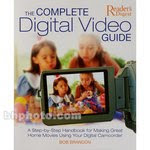
The first book is The Complete Digital Video Guide by Bob Brandon (Penguin Books, $26.95, B&H Photo-Video; $14.75 Amazon). This is a huge, full-color book that repeats the basic principles and then goes intogreat depth on how to tackle specific video projects. Besides being useful, it also makes a lovely coffee table book. The late Mr. Brandon’s book remains a current and informative reference.


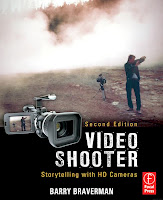
The second book is Video Shooter by Barry Braverman ($17.24 Amazon). This book really goes into the technicalities of digital videography and is probably the definitive guide. It is also a full-color book, well worth the price.

Projects

Books are OK, but in the long run it is experience that counts. Remember success comes from doing, not talking about it. By now you know enough to tackle more advanced project and you’ll start to identify your own projects that you’re interested in. To assist you we will recommend two books that give guidance on how to select and tackle projects. Both are written by seasoned teachers of videography for high school and college students, but they cover different styles of video: documentaries and short films.

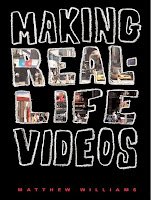
The first book on the face of it is not interesting and has no colorful illustrations but don’t be fooled. It is also a gem of a book. Making Real Life Videos by Matthew Williams ($19.95 Amazon). This book covers the steps in making documentary-style videos in great detail and has many suggestions for projects that you might want to tackle.


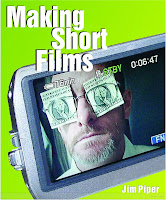
The second book is Making Short Films by Jim Piper
($24.95 Amazon). Short films are a genre that is becoming very popular at film festivals. It is different from the previous books in that it describes projects where you write the script, i.e. the story, before producing the project.

Both these books will cover important topics like project outlines, treatments, scripts and storyboards — fundamental concepts every videographer should know.


Videos about Videography

Most of the books we’ve talked about make valiant attempts at explaining how to use, for example, basic video editing software. It can be quite difficult to visualize the concepts — it would be so much easier if you had an expert that could actually show you
how. Well, you can through the power of video!

Our first recommendation is that you subscribe to Lynda.com. It costs about $25 per month and will give you access to training videos that you can watch and re-watch as often as you like, 24/7 every day of the week! There are training videos on practically all the major video editing software for the PC and the Mac, as well as training on DVD creation software. Having access to these training videos is priceless, it is like having an editing expert on hand whenever you need one.

Video Editing Software

In the first article, we said that any computer and any of the free video editing software products that are included in your computer’s operating system (iMovie or MovieMaker) would be OK to begin with. By now you will have discovered the limitations of that statement. So at this stage we would like to encourage you to invest in more advanced video editing software.

But what to recommend? If you’ve already invested in one of the more advanced editing products we mentioned in the first article, then that is fine, and by all means stick with it and become good at it! However, if you have not, we’re going to make a specific recommendation and explain the reasons why.

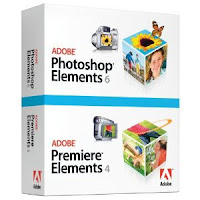
We would like to recommend the combined Adobe Premiere Elements and PhotoShop Elements. This software costs just over $100 ($113.92 Amazon) from Amazon.com.

The reasoning? Besides that it is inexpensive yet very powerful, the software is available for both Mac and PC. Most importantly, there’s extensive training available on Lynda.com. This alone would be a clinching argument but there’s more! Many videographers ind that these two programs are all they’ll ever need. However, you can at any point move up to the full professional Adobe Premiere and PhotoShop programs (that will cost you several thousand dollars) and still use the projects that you’ve created previously with the Elements versions of these programs.

Why include Photoshop? In practically all video projects you will include still photos nd other graphic elements. This is particularly true for the design of DVD menus. Having an easy-to-use program like PhotoShop Elements will soon prove worth its weight in gold!

If you’ve followed our recommendations, we would like to suggest another gem of book: Creating Hollywood Style Movies by Paul Ekert and Carl Plummer ($34.19 Amazon). This wonderful book gives many step-by-step instructions for fun editing
projects using Premiere Elements that will give your video projects pizzazz beyond anything that you had imagined possible! All the video material you need for the projects are included o the DVD that comes with the book. You will learn how to create night vision video, shrink the kids, green screen projects, typical newsroom videos and much more.

Paying Projects

Are you ready to charge for your work? By now you’ll probably be only too ware of what you still don’t know. But don’t underestimate what you already know. That said, you probably don’t know enough, and don’t have equipment that would allow you to charge a full professional fee. But that does not mean you cannot charge at least something. Earning something for a project is a real confidence booster!

Events like school plays are a good place to start. Weddings can be a real trap in the beginning. The starry-eyed couples have a vision of a Hollywood-style production but have a budget of next to nothing. If you make it REALLY clear that you’re just starting out but are willing to help them get a realistic video at their budget, this is a possibility.

At this point by all means make it clear to all you approach regarding doing work for them that you’ve started a career in videography and are looking for projects. At the same time be very realistic about your capabilities. We will discuss the business side of videography in more detail in upcoming articles.

Summary

In this second article we’ve suggested more books to help you on your way to becoming a professional videographer, i.e. earning money using your hard-earned videography skills. We’ve also introduced the third important key aspect of our roadmap, video about videography.

In the next article the focus will shift to specific types of video production, as well as the business side of videography.

Endnote: At this point you might be tempted to invest in a more professional, more expensive video camera. Please do resist the temptation, there will be time enough soon! The reality is that the end result of most of your projects at this point will be a DVD or a video on the Web, and for that, standard definition video is all you’ll need. There are other pieces of equipment that are more important to you to invest in, and THAT we will talk about in an upcoming article.

Heidi Mueller, New Westminster, BC, Canada, is an accomplished video producer, web site developer/designer, writer and course developer for adult classes. She is a frequent contributer to E.C. Come, E.C. Go and was recently the featured contributor of a four-part series on WordPress for web site creation. Future articles will continue focus on development of A Roadmap for Beginners, as well as information for intermediate level videographers, and ideas for developing successful marketing niches in the wide world of video production.

Remember: If you market, you will make it! © 2000-2011 Earl Chessher

Sunday, January 09, 2011

A Roadmap for Beginners

Introduction

A few years ago I decided to become a videographer and make a living at it. As I knew nothing about videography, I thought it would be as easy as buying a video camera, spending an afternoon reading the instruction manual and then getting started — which I did. In a way I’m glad I was so ignorant, because if I had known the very steep learning curve that lay ahead, I would probably never have started. But I’m glad I did.

So just how does one get to know the videography business? You could of course go to film school if you are young enough and can afford it. However, in this short article I will describe a more practical and affordable approach. I am assuming that you are starting out and, as I did, have no knowledge at all.

Make no mistake, the learning curve is enormous. You need to master several main topic areas:
• the video camera itself and all its technical things including different types of
camcorder technologies and accessories
• shooting video and related issues such as lighting, sound, framing, storyboards and
more
• editing the video footage into a useful and pleasing end result
• the business side of videography including the many legal issues
• the different types of videography including documentaries, weddings, events,
commercials, film-making, and more.

But the beauty is that you do not need to know everything all at once, you will learn (and earn) as you go. My practical approach is based on two key concepts:

1.) read books
2.) go out and do little projects

Why books, you might ask? Well, it is by far the most cost-effective way of learning. A typical book costs about $20 - $30. Yet it represents the equivalent of several hours of “listening” to an expert explaining a topic. Not only that, once you have bought the book, you have that expert on hand all the time. Always have a book with you, so while you wait in the doctor’s waiting room or at the hairdresser you can whip out the book and learn more exciting things about videography. You will go back and reread your books because you will probably miss many of the points made in the books as you still did not have the necessary experience to appreciate all the points.

The second key is to do smaller projects that can be completed successfully in a day or two. Success breeds success. It really feels so good to have completed a project, even if the video is not all that good. But having more ambitious projects that are unfinished because they become so daunting will really get you down!

Getting started

So let’s get started. I am assuming that you are starting from scratch as I did. Maybe you got a video camera as a present or you’ve always been fascinated by video and are thinking of buying a video camera.

Before we even worry about getting a video camera, I would suggest you buy the following book and read through first: The Little Digital Video Book by Michael Rubin. This little gem of a book is available from Amazon for less than $20 (currently $17.09) and it’s worth every penny.

The book does cover much of the basic videography information that you will need to know. But most importantly, it describes a series of small practical projects that you can do easily and complete. The author refers to them as “exceptionally finish-able projects”. In addition you can visit the author’s blog where he has posted the finished results of the projects he recommends in the book. (To find out a bit more about the author you can view a podcast interview of him with Nancy Ruenzel)

Once you have read the book, you will have an overview of what you will be doing in the next couple of weeks on your exciting journey into the fun and challenging world of video production.

What you need to get
Now what will you need to actually do these mini projects? You will need:

1.) a video camera (also referred to as a camcorder)
2.) a computer, and
3.) video editing software.

That sounds simple enough, but it can be very overwhelming for a beginner as there are so many choices for each of the three items and we “experts” have our own strong opinions on them. The good news is that at this point it really does not matter what you get. Any camera, and any computer, and any editing software will help you become familiar with the concepts of videography.

Should you get a PC or a Mac? It does not matter, the one you are most familiar with is the right one for you. One caveat is that editing video is quite demanding so a relatively new computer would probably be better.

What about a video camera? Again, if you already have one, or can borrow one from a friend or family member, that is the way to go. Once you have had more experience using a video camera you will be in a better position to buy a camcorder that is right for you. (If you have to buy a camcorder, see the endnote for some guidance).

What about editing software? It depends on the type of computer that you have, both the PC and the Mac have free basic video editing software included — MovieMaker on the PC, and iMovie on the Mac. To start with, these video editing programs will do just fine.

The Next Steps

So at this point you now have a book that describes a number of projects for you to do, you have a camcorder, and a computer with editing software.

Get to know the video camera
You first have to learn how to use the camcorder. If you borrowed it, ask the friend to show you how to use it or go through the operating instructions. For the first projects you only need to know how to turn the camcorder on, and put it in “auto mode” where the camera will adjust the focus and exposure for you automatically.

Get to know the editing software
For each project you would typically have about 20 minutes of video footage that you will edit down to about 3-5 minutes in a finished production. So you need to know how to get the video from your camcorder into your computer and then do the editing. Clearly here is your first major “learning curve”. Some of it is described in Rubin’s book. If you do a search on Google for whatever video editing software you have on your computer, you are sure to find video tutorials that will show you how to capture the video into your computer and how to do the basic editing. (One resource featuring affordable lessons and even free sample tutorials for many popular programs is at Lynda Dot Com)

You need to set aside a weekend or two for this getting-to-know-your-basic-videography-tools phase. Don’t rush it. You can watch the video tutorials you found through Google as many times as you like. Remember you are learning a whole new discipline, and you are having fun while doing it! Don’t be afraid to experiment or even mess things up altogether.

Once you have a working knowledge of your camcorder and editing software, be sure to do the projects in the book. Set yourself a target of starting and completing at least one project every weekend.

Conclusion

Once you reach this point you will know, and know that you know, what an establishing shot is, and a close up and point-of-view (POV) shot, and much much more. And your investment will have been the $20 for The Little Digital Video Book and your time. What an inexpensive way to have fun and to prepare for a new career!

In subsequent articles we will discuss the next steps in the Roadmap for Beginners, and recommend more books to read as well as other resources.

Endnote: If you find that you do have to buy a video camera, keep in mind that you do not have to buy the most sophisticated camera. Sales people will often try and get you to purchase something rather more expensive than you really need. If you stick to the known brands like Canon, JVC, Panasonic and Sony for example, you can hardly go wrong. Avoid the point-and-shoot varieties like the Flip and the Kodak Zi8. They have their place for sure but at this point they would limit your learning.

At this point you do not really need high definition (HD) either. It would be helpful to get a camcorder that allows you to use an external microphone. A GREAT resource for identifying affordable camcorders is the camcorder reviews and information provided by forum users at Videomaker Forums.

Heidi Mueller, New Westminster, BC, Canada, is an accomplished video producer, web site developer, writer and course developer for adult classes. She is a frequent contributor to E.C. Come, E.C. Go and last was featured in a four-part series on WordPress for web site creation. Future articles will continue focus on development of A Roadmap for Beginners as well as information for intermediate level videographers and ideas for developing successful marketing niches in the wide world of video production.

Remember: If you market, you will make it! © 2000-2011 Earl Chessher
Wednesday, December 29, 2010

Are You Serious About Your Video Business?

HOW SERIOUS are you about your video operations? Do you limit yourself to video as a hobbyist, or are you attempting to “work” your enthusiasm into a business? To what degree? Are you going to settle for being a part-time independent professional video services provider or will you pursue this more actively, aiming toward a full-time business? Will this become a career-changing move, or simply augment your current job/position or retirement income? Is it time to assess your desires and ambitions, or do you simply wish to continue along a non-committed path of serendipity?

HEAVY QUESTIONS, for sure, but it might not hurt to take a good, long look at what you really want, what expectations you have at the top of your thoughts, or subconsciously — somewhere in the back burner of your mind where you rarely check to see what’s cooking. Not all of us take ourselves or our businesses so seriously. But maybe we should, especially if we actually expect something to come of it.

THE FIRST and foremost question is “How can I get a job (start this business) without experience” quickly followed by “How can I get experience (make this business work for me) withoug getting a job?” The answer, especially in the video business, is actually very simple: “Just do it!” In any career or business effort there is simply no shortcut to getting there. You have to put in the time and effort, invest the money and take chances in order to accomplish any goals in life.

Starting out with this realization will help keep the depression and disappointment of perceived failure at a minimum, and keep you focused on the long road — the road that leads to success. Keep in mind also that “success” is not only a state of mind as much as a reality of life, and perceptions have a lot to do with whether you, your friends, others in the business or your clients consider you successful. So consider the term generally, but don’t hang a lot of specifics on that tag. It’ll drive you nuts.

WHAT YOU NEED RIGHT NOW is some degree of knowledge and some basic equipment. For everything else there’s Google :-) and keep this in mind: You can learn a lot by reading material such as the articles on E.C. Come, E.C. Go, visiting other video related blog sites such as Lorraine Grula’s and Jay Michael Long’s, paying the price for a few lessons (but first check out the free samples) at Lynda Dot Com, not to mention viewing the literally millions of video production samples by independent (as well as commercial films) video producers.

THE CLASSROOM CONCEPT of education for film and video production has proven value, but a lot of that environment is based on theory, if not unproven concepts, and carved-in-stone “rules” that don’t always provide the needed answers once you’re out there in the trenches. Contrary to general opinion having a degree alone isn’t all that and a bag of chips. You need to immerse yourself in the effort and that means going hands-on.

SIMPLY REALIZING THE ESSENTIALS you might begin to ask yourself if it is worth the effort, the expense, the time ...
... We’ll take a look at that during the next segment of this ongoing series on E.C. Come, E.C. Go.

Remember: If you market, you will make it! © Earl Chessher

Saturday, December 18, 2010

Make Your Plans NOW!

You’ve got plenty on your mind this next few weeks, but it’s not too early to start making plans for your video business operations and marketing strategy for 2011. As soon as you read this, and if you feel ANY inspiration at all, pick up your iPad, laptop or other computer, open your Circus Ponies or other planning software, or grab a pencil and a tablet and start your outline.

Before simply continuing with what you already are doing, think about new paths and directions. For some, what they are doing is perhaps enough, for others more will be needed to continue to survive the coming year, much less anticipate or consider growth, even expansion of your video business operations.

There will ALWAYS be weddings, or maybe not. But let’s just say your wedding business operations are where you want them to be and the referrals are pouring in. Whether you’re full time or part time in the video business, there are things you can plan for now that will help you achieve your 2011 income and business goals.

STEP ONE
Go through your 2011 production calendar and note all the holidays and special days: Valentine’s Day, President’s Day, Tax Day (just kidding), Easter, Memorial Day, Mother’s Day, Father’s Day and all the other days of observation. Copy them to your planning program.

Aside from weddings, what other possibilities are there for these special days?
• Personal documentaries
• How to videos on unique Easter egg decoration, cake creation or sugar molds
• Patriotic themed productions
• Small and independent business promotions and web video

STEP TWO
Do some research to identify where, how and to whom you can market for these and other video production/product concepts. A good Google search will generate an abundance of opportunities, groups, clubs, organizations and even generate some new ideas for marketing and potential clients that you never thought of before. Go with the flow and develop some concepts. You don’t have to flesh them out now, simply get them down so they will not elude you later.

Make your list and check it twice ... LATER.
• Potential new businesses that might be receptive to video in their marketing
• Groups, clubs and organizations that could use video in promoting their programs
• Those small businesses that might have never pursued a video or Web presence
• Church groups planning for their silver, golden or 100th anniversary celebrations
• Memorial themes recognizing members who have died
• Other potential avenues of video need that might often be overlooked

STEP THREE
Jot down some quick notes as they pop into your head. They don't have to make sense, but believe me when you begin working on some freestyle thinking like this little nuggets will get discovered. These can often wind up being nothing more than fool’s gold but a few are diamonds in the rough, if you’ll kindly overlook the cliché. Decide your best approach after the holidays.

• Expand on this, or that idea or concept
• Can I make this happen
• Is this too big for my operation
• What can I do NOW
• What do I need to work on long term
• How saturated is the market for this

Within the first 10 days of the New Year you’ll want to visit those notes, concepts and ideas and make an actual action plan for 2011. Action can often accomplish more than reaction, so YOU be the one to get things started.

It is never too early to begin a campaign but we often start too late. February 1, is not the time for mailing out promos or social networking or advertising for Valentine’s Day special proposal DVDs (relationship photos put to music and ending in “Will You Marry Me?”) or for developing and selling personal Valentine’s Day “Roses are red, violets are blue ...” video DVD cards.

It may, in fact, be too late already, but if you get something going during the first half of January, before heads and hearts start leaning toward February 14th and boxes of candy, you can probably open up a whole new approach to speciality video production.

Remember: If you market, you will make it © Earl Chessher, 2010

Monday, December 06, 2010

New Wedding Marketing Approach

This one is experimental, but not without precedence. And the concept isn’t without a foundation in my personal wedding market experience either. It is most evident in many of the ethnic weddings I’ve produced, and it’s an option for all but the most snooty social upper crust. Well, maybe a few of them as well.

Some Call them Sponsorships.

The activity is a little like a gift registry, something like gift cards or certificates and I’ve come up with another concept that just might take this approach to funding a professionally produced wedding video another step forward: announce acceptance of sponsorships, gifts or donations toward purchase of a professionally produced wedding over the social networks.

Why Not?

People are already posting on just about everything else in their lives: where they eat and shop, who they like or despise, where they’re going for their vacation, what they’re going to do with that discretionary money. So, how about letting your Facebook “friends” and Twitter “homies” and other social network contacts know how badly you want and need a professional wedding video producer for your upcoming event?

Brides-to-be already e-mail their contact lists with notice of intent to get married, where they can go (or participate online) to utilize a bridal gift registry, and get updates on the planning and programming for that special event. Might as well utilize those effective networking strategies everyone keeps posting, blogging or bragging about.

Socially Unacceptable or Incorrect?

Very little these days, fortunately or not depending on what side of 50 your age lies, is considered socially intolerable. Where it used to be taboo to serve champagne in a Dixie cup or even do wedding dinners cafeteria style, this is no longer the case. They’re even “trashing” REAL wedding dresses nowadays for goodness sake.

So tell me, what’s so wrong with suggesting to your budget-impaired bridal prospects that there might be an acceptable and potentially successful way to fund their professional wedding video production without cutting into the ice sculpture and live band funds.

The implications to or reflections upon independent professional video service providers certainly can’t be any worse than those found on Craig‘s List: “do my wedding for free and I’ll put you in touch with all my friends who are getting married,” or “videotape my wedding for nothing and I’ll brag about you on my social network.”

Over the years I’ve had a degree of success in the bridal market with lay-away payments, monthly payments and gift registry video. I think I might start suggesting the social network fundraiser approach and see what happens. Why not? It’s been working for politicians.

Remember: If you market, you will make it! © Earl Chessher

Tuesday, November 09, 2010

They Shoot Funerals, Don't They? Production Outline

Production Outline for

They Shoot Funerals, Don’t They

release date Dec. 15, 2010.


They Shoot Funerals, Don’t They: The Definitive Publication & Resource Program for Independent Professional Video Services Providers Seeking to Expand their Business


I. Introduction

A. Synopsis: It’s a Funeral, Get Over It!

1. Professional Video Services for a Seriously Under Served Market


B. First Things First: Marketing Funeral Video Services

1. A Story: Edit Out His Girlfriend!

2. Marketing to Funeral Services Facilities

a. Funeral Homes

b. Mortuaries

c. Cremation Service Providers

d. Pastors, Ministers, Rabbis, Bishops, Deacons, Priests, Officiants

3. Marketing to Churches & Synagogues, Temples & Chapels

4. Marketing to Individuals

5. Other Marketing Options (Necessities)

a. Your Domain Name

b. Your Website

c. Using Your Social Network Connections


C. Establishing Competitive, Reasonable, Profitable Fees

1. A Story: Taps, Fly-overs, Bikers and Military Escorts

2. What is Your Competition Charging

a. Do You HAVE any Competition?

b. What is Fair Value?

c. Adding Extras

d. When it Becomes ‘Nickel & Dimeing’

3. Competing with Funeral Homes & Places of Worship

4. On Location VS Multiple Sites

5. Rosary, Viewings, Visitation, Wakes & Receptions

6. Graveside & Committal Services (What‘s the Difference?)

7. Extreme Customer Service: Success Means Going the Extra Mile

8. Keeping Your Business Profitable


D. Family Clients Don’t Know What to Expect

1. A Story: Sometimes They Do Wail

2. Yes, Uncle Charlie Also Operates Here

3. “Edited” Doesn’t Mean Leaving Out Anything

4. Mostly It’s Another Celebration of Life

5. Let Those Attending Know You‘re Videotaping


II. Establishing Relationships

A. Get to Know Who Manages the Counselors

1. A Story: Most of the Time They Celebrate, Sometimes Wildly

2. Get to Know the Family Counselors

3. Get to Know the Service Directors

4. The Officiant Can be Your Best Friend or Worst Nightmare


B. Your Word is Your Bond

1. A Story: Hallelujah It’s Raining Men

2. Make NO Promises You Cannot Keep

3. You MIGHT Get One Pass, but That‘s Probably It

4. If You Mess Up, Fess Up

5. Politics: If “They” Mess Up, Don’t Tattle

6. It’s Not My Job! Be Helpful


III. Working Well with Others

A. Musicians, Soloists, Doves, Bag Pipers & Processionals

1. A Story: There‘s No Business Like Show Business

2. Other Vendors are Your Friends

3. Keep it Upbeat. Don‘t Gossip, Grumble or Gripe

4. NO! You Absolutely May NOT Eat Unless They Insist

5. How Relationships Can Work for You: Networking


B. How You Dress is Important

1. A Story: It Helps if You Know There‘s a Theme

2. Ethnic Funerals

3. Formal Funerals

4. Informal Celebrations of Life (Still a Funeral)


IV. Putting It All Together: Producing Your Video

A. Videotaping

1. A Story: Tell the Guy on the Pipes to Quit Playing

2. What You WANT to Videotape

3. What You DO NOT Want to Videotape

4. Ask First, But Probably Videotape the Casket

a. It’s a Casket, Not a Coffin

5. Get There Early

6. How Long Does a Funeral Last

7. Standard Definition or High, 4x3 or 16x9


B. Audio

1. A Story: I Know it was a Compliment, but Leave it Out

2. Redundant Audio Backup

3. Your On-Camera (Built-In) Mic

4. Other Audio Recording Needs

5. Speak from the Podium, or Else


C. Lights, or Not?

1. A Story: Masons, Knights, Cops & Mariachis

2. When to Use Them

3. When it’s Better if You Didn’t


V. Putting It All Together: Editing Your Video

A. Basic Shoot, Deluxe Production & Unedited

1. A Story: This is Why People Hire a Professional

2. What Goes Into a Basic Production

3. What Goes Into a Deluxe Production

4. Do you WANT to Offer RAW Footage

a. Clean it Up First? (That’s Editing)

5. What Gets Left In, or Left Out

a. Do I Need the Family to Fill Out a Form


VI. Other Services You Can Offer

A. Photo-Music Memorial Montages

1. A Story: Facilities Don’t Always Get it Right

2. Production Levels & Styles

3. Scanning the Photos & Digital Resources

4. Remember: It’s the Photos

5. Keep It Short for Service, Longer for Reception or Family Only

6. Fast or Overnight Turnarounds Often Necessary

7. Offering, Giving Away, or Selling the Scanned Jpegs on CD

8. What Should I Charge


B. Satellite Feeds

1. A Story: Monitoring the Feed Guerrilla Style

2. What Does it Take to Do This

3. What if I Add Videotaping, Other Services

4. What Should I Charge


C. Audio Recording Only

1. A Story: OK, I’ll Take a Video Too

2. Back it Up for Security, Sales

3. What to Use for Audio Only

4. What Should I Charge


D. Memorial Montage Projection

1. A Story: Twenty Minutes Until Showtime & No Lamp

2. What Do I Need to Offer This

3. Have a Second System, Lamp (Know How to Replace)

4. What Should I Charge


E. Other Options & Opportunities

1. A Story: I Want to See My Memorial Montage Now

2. Heritage Productions: End of Life Testimonies

3. Personal Documentaries: Full Production Treatment

4. Something Special for Alzheimer’s & Hospice Families

5. On-Site Family History or Short Documentary Kiosks


VII. Support & Resource Materials

A. Direct-mail Postcards


B. Direct-mail Letters


C. Art & Graphics


D. Release Forms


E. Agreement Forms


VIII. DVD & CD Samples & Resources, PDF files


Advance orders are now accepted at a substantial savings over regular and special pricing. Inquire via e-mail to echessher@hotmail.com

Current pricing set at $49.99 plus S&H advance orders; $79.95 plus S&H for orders received between Dec. 15, 2010 and Jan. 10, 2011; Regular price $129.95 S&H included.

Tuesday, November 02, 2010

They Shoot Funerals, Don't They?

Provide Professional Video Services
for a Seriously Under Served Market

(Excerpt from “They Shoot Funerals, Don’t They” publication by Earl Chessher, to be announced for publication, release and purchase between December 15, 2010 and January 10, 2011. Advance orders accepted.)

by Earl Chessher

Videotaping and producing funeral and memorial events is not for everyone, and not everyone is interested in acquiring this service. It has been my experience over the past 20 years, however, that everyone who is made aware affordable professional videotaping service is available has at least considered the opportunity to preserve a very personal and meaningful end-of-life experience.

Primarily, with client families, the decision is based on finances, and not so much on emotions. If they can afford to do so the majority of them will. Contrary to the opinions of many, most funeral services providers (funeral homes) are not offering videotaping services in an effort to “squeeze” another dollar out of a grieving family, but to offer a valid service for the preservation of special memories, eulogies and moments during this celebration of life.

“They Shoot Funerals, Don’t They” will correct much of the misconception and misinformation that exists today regarding funeral videotaping. A lot of what you read and hear is myth, or misconstrued “fact”, heavily based on personal opinion but not much experience. Not everyone has faced an end-of-life experience with a loved one, but until we have each of us has developed a personal scenario based on emotions, and bad information.

This resource will help you not only understand the very real need for funeral videotaping, as well as photo-music memorial montage, end-of-life heritage video, and personal documentary production, it will provide the information you need to pursue this market. Even if you aren’t seeking to specialize or actively expand into the funeral and memorial video production business, the information contained here will enable you to comfortably say “yes” should a request be made, knowing that you can in fact do what’s right and do it right.

To expand on your awareness of what goes on, and what can happen, during a funeral I’ve taken the liberty to share some of my experiences. In the interest of protecting the privacy of my client families I’ve either used fictitious names or none at all, but every vignette shared throughout this publication is real. These events actually happened. Reading them, along with the practical information, will prepare you for rewarding real-life opportunities in funeral video production.

You will learn what to expect, and what is expected of you. You will be surprised that much of what you’ve thought and heard throughout your life is not relevant to the business of funeral video production. You’ll become aware of the very real value placed on your services, and the deep sense of personal reward doing so provides.

You’ll be amazed at how often people who are mourning the loss of a loved one, families who have paid you to professionally videotape this private, often very personal, event will thank you for doing so. They will hug you, hold your hand, share a special personal story and say ‘God bless you,’ for being there. And your heart and soul will burst with feeling, empathy and emotion you never thought possible while in the middle of a bunch of strangers.

Editor’s note: Availability date of “They Shoot Funerals, Don’t They” will be announced Dec. 15, 2010. Advance orders are being accepted. Contact me via e-mail at echessher@hotmail.com regarding how to order.

This resource guide will include valuable informed and accurate information based on the author’s many years of experience in producing funeral, end-of-life and celebrations of life videos. Chapters will contain the information you need, from developing and marketing, to production and recommended equipment.

“They Shoot Funerals, Don’t They” will include templates, sample letters, direct-mail graphics, samples of funerals from basic coverage to fully edited, military honors events and more. There will be PDF and document files you can revise for your specific purposes and needs, as well as release and agreement forms, brochures and instruction sheets.

Remember: If you market, you will make it! © Earl Chessher

Sunday, October 17, 2010

Wichita Video Works Posts Interview

Video StoryTellers!™ associates Pat & Judy Handley, of Wichita Video Works, have recently conducted some great interviews for the Video StoryTellers!™ program in Kansas.

Check out this interview for now (other VST producers will soon be featured): the quality, the content and the production value. Yet another reason for being a part of the program and for hiring professional video producers to help share, save and preserve stories and memories. Everybody has a story!

Check out other links at this blog to find out more about how you can increase your income and market reach, as a startup business in video, or an established video professional looking for a way to expand your business.

Also, see John’s story, produced by Wichita Video Works, featured below. These two great Video StoryTellers!™ interviews will be the featured “StoryTellers of the Month” on the official VST website.


Saturday, October 09, 2010

Video StoryTellers!™ Gains Exposure

Video StoryTellers!™ (VST) will be the main focus and thrust of my video business for the remainder of this year and beyond. Why? Because this global program is going to become one of the most popular video services in the world, surpassing even youth sports and wedding events. And, it is going to MAKE ME MONEY!

While I’m conducting a major thrust with this program, brand and marketing now, I anticipate that this will develop into a significant portion of my 2011-2012 business strategies. I expect to be too busy producing people's stories on DVD to do much of anything else!


Based on the very real fact that everybody has a story, I’ve moved full-throttle into a major direct-mail campaign, guerrilla marketing strategy and business promotion program for VST during the remainder of this year that stands to generate $300 to $500 a day, building toward an unimaginable figure over the next couple of years. All I have to do is work the program.

While I maintain a solid business market with event and Celebrations of Life! videos ranging from memorial and photo/music montages and projection, to funeral videotaping and production, youth events, dance recitals and school performance video, I plan to continue an aggressive campaign with VST.

Some have joined me in this venture and others will come onboard during the next quarter 2010 due to the special 50% savings being offered through December 31, 2010. With the momentum that is continuing to build, still others will gladly invest over the next two years to become a part of this valuable worldwide branded service.

Thanks to the ongoing inspirations shared by VST associates Heidi Mueller of H Mueller Design, Canada; Jim Nicholson of Nicholson Video Productions, Pennsylvania; Bill Mecca of Mecca Video Productions, New Jersey; Luis O. Maymi of Xeneuxe, Puerto Rico; Chris and Val Harding of Softweigh, Australia; J. Michael Long of JML Multimedia, Mississippi; and a host of others, Video StoryTellers!™ has developed, grown and evolved into a significant brand representing professionals who offer an affordable approach to the sharing and preservation of personal stories and memories.

Next to come will be news and magazine articles, a unique website (under construction at VSTWorldWide.com) featuring private and public forums, blogging and live chat for associates and the many storytellers who will be seeking our services around the globe. Development of marketing strategies and materials, news releases, articles and more will be ongoing.

For more information check out the related articles on this blog, send me an e-mail or call using the information on the VST site linked at the beginning of this article.

Remember: “If you market, you will make it!” © Earl Chessher

Saturday, September 25, 2010

50% Off Global Program Through December!

“Everybody has a story!” Think about that for a second. Where have you been with another individual, group, the family or friends that someone, or all, have failed to share one anecdote, one story, relate one memory or synopsis of an occurrence. Whether it happened this morning, yesterday or to their great-grandfather, you’re going to hear somebody’s story today.

Even while recently conducting “Person-on-the-Sidewalk” interviews during a recent live marketing activity I had no problem getting total strangers to share their recollections of what they were doing and where they were during 9/11, The Challenger Explosion and JFK’s Assassination. Many of them shared more personal recollections as well and freely gave me permission to feature them on a website for worldwide preservation and sharing of stories — Video StoryTellers!™


It’s THAT easy! Video StoryTellers!™ is a global marketing and branding program for the preservation and sharing of people’s stories and memories. And PEOPLE WILL PAY YOU for this service, starting with the totally affordable base price for receiving their precious memory or story on DVD.

Find out more by checking the links throughout this blog. There is an extra added bonus for anyone coming onboard with Video StoryTellers!™ during the next few months. From NOW through December 31, 2010 you can become a part of this worldwide branding and marketing program for 50 percent off the standard investment price.

Sign up today for your service area, or go for state or country associate level and offer others in your “territory” their own franchise and service area for extra income.

A minimum effort, IF YOU WORK THE PROGRAM, based on eight hours a week (working part- or full-time) will bring you more than $26,000 a year ONLY producing stories — one at a time!

Remember: If you market, you will make it! © Earl Chessher