I bet you thought you'd never get another notice of something new on EC Come, EC Go. Well, yes, it has taken me a long, long time, but after all kinds of excitement in my health life over the past year, I just might be ready to revisit and share information about writing, publishing and marketing, as well as a bit of back story about recent and new titles being released.
I've no intention of abandoning EC Come, EC Go. Hang with me here and maybe I can share a few things that make it worth a return trip. Give me a little more time, and I'll do what I can to make it worth your while.
Thanks for not giving up on me. Well, most of you probably have, and with good reason, but I hope I can lure you back with some useful, if not interesting stuff.
Meanwhile, our good friend and my personal professional website developer, and Fiction Writers Group member, Charlotte Townsend, will soon be taking over management of the FWG official website at Writer's Anarchy. I'm working up the plans for a second JanuWriMo 2017! (not affiliated in any way with NaNoWriMo) and soon will be developing a funding program to enable FWG to offer writing contests and other neat things. Hang onto those keyboards, pens or pencils, because things are about to get “writerly” around here.
Later,
Earl
Wednesday, October 26, 2016


Thursday, January 15, 2015
Self-Publishing: A Return on Your Investment?
Can I Expect a Return on my Investment as a Self-Publisher?
Can you “expect” a return? The answer to that is no. The odds are against it. But, if you focus on the following six steps you will increase your chances, and the possibility of generating an income, if not a profit, but not from one, stand-alone, title.
I initially anticipated this to be a single article, but I am convinced that it needs to be expanded into a six-part series instead. There’s just too much to share in one sitting. I don’t want you falling asleep on me, or going to YouTube and watching videos instead.
Step No. 1 — Write more. Write often. You need more than one title.
You won’t break even on one title, but you stand a chance of that and more if your sites provide more than a single title option for visiting readers and, eventually, loyal followers.
Here’s the thing. Sure, you want to publish longer stories. You desire to push past the average short story (or maybe not) and pen and publish novellas and novels in the 25,000 word to 90,000-plus word category But, assuming you have sites where you can feature your titles, even offer eBook downloads and print versions, you can do something within the next two weeks that will generate a surge of interest in your titles—feature eight to ten good, well-written, satisfying short stories.
This keeps your one longer title company and gives the impression you are a dynamic writer, a prolific writer, and that the return visitor can depend on finding new material written by you virtually every week or ten days they drop in for a look.
Come up with a 500-to-1,000-word short story today. Edit tomorrow. Generate a reasonably attractive cover for it (more on that later), polish and publish. Announce its availability on all your social sites, especially Facebook, Twitter and LinkedIn. As well as others. At the rate of one new title every two days, you will have effectively buffed up your backlist to seven, or more, new titles in two weeks.
No, no, no...it's totally doable. You’re a writer with lots of ideas going on inside that creative mind of yours. Take those ideas, use your muse, and generate these titles. Let them be the precursor to future, longer works, but make them complete, with the traditional beginning, middle and end.
Plan on four hours tops, to generate a 500-word short story—maybe the same for a thousand words, or an hour or two more. Editing? The next day? A couple of hours. Formatting and uploading, another couple of hours. So, you invest, say, eight hours in two days to generate a new title. Some can do this faster while others may need a bit more time. In any event, you are a writer. Write those stories with the knowledge that you are investing in a business that can bring a return provided you are willing to make it happen.
You might be more comfortable knocking out seven or eight short stories in a few days, then going back and editing them, then going back and designing the cover, formatting and uploading. If that is how it works for you, then by all mean, go for it.
MORE TO COME...
Can you “expect” a return? The answer to that is no. The odds are against it. But, if you focus on the following six steps you will increase your chances, and the possibility of generating an income, if not a profit, but not from one, stand-alone, title.
I initially anticipated this to be a single article, but I am convinced that it needs to be expanded into a six-part series instead. There’s just too much to share in one sitting. I don’t want you falling asleep on me, or going to YouTube and watching videos instead.
Step No. 1 — Write more. Write often. You need more than one title.
You won’t break even on one title, but you stand a chance of that and more if your sites provide more than a single title option for visiting readers and, eventually, loyal followers.
Here’s the thing. Sure, you want to publish longer stories. You desire to push past the average short story (or maybe not) and pen and publish novellas and novels in the 25,000 word to 90,000-plus word category But, assuming you have sites where you can feature your titles, even offer eBook downloads and print versions, you can do something within the next two weeks that will generate a surge of interest in your titles—feature eight to ten good, well-written, satisfying short stories.
This keeps your one longer title company and gives the impression you are a dynamic writer, a prolific writer, and that the return visitor can depend on finding new material written by you virtually every week or ten days they drop in for a look.
Come up with a 500-to-1,000-word short story today. Edit tomorrow. Generate a reasonably attractive cover for it (more on that later), polish and publish. Announce its availability on all your social sites, especially Facebook, Twitter and LinkedIn. As well as others. At the rate of one new title every two days, you will have effectively buffed up your backlist to seven, or more, new titles in two weeks.
No, no, no...it's totally doable. You’re a writer with lots of ideas going on inside that creative mind of yours. Take those ideas, use your muse, and generate these titles. Let them be the precursor to future, longer works, but make them complete, with the traditional beginning, middle and end.
Plan on four hours tops, to generate a 500-word short story—maybe the same for a thousand words, or an hour or two more. Editing? The next day? A couple of hours. Formatting and uploading, another couple of hours. So, you invest, say, eight hours in two days to generate a new title. Some can do this faster while others may need a bit more time. In any event, you are a writer. Write those stories with the knowledge that you are investing in a business that can bring a return provided you are willing to make it happen.
You might be more comfortable knocking out seven or eight short stories in a few days, then going back and editing them, then going back and designing the cover, formatting and uploading. If that is how it works for you, then by all mean, go for it.
MORE TO COME...
Saturday, January 10, 2015
Postcards, Direct-Mail, Can Work for Authors
When folks say direct-mail campaigns are expensive, they're usually talking about paying for mailing lists/addresses, sending out a thousand or more at a time, and the sorting and grouping that comes with handling such volume. Direct-mail postcards and postage, however, can fit most any budget.
You can go to Vistaprint, GotPrint, Over Night Prints, America's Printer, Zazzle and a host of other printers and get real bargains on small- or large-run printer services for everything from business cards to flyers to postcards to book markers. You get what you pay for, but prices range from $20 to $50 to $100, depending on amounts, colors, size and other considerations. I personally have used America's Printer and Vistaprint. Both are good, my go-to printer is America’s Printer for all-around service and generally competitive pricing.
Those giant postcards are not what you want, and they do not impress me—I suspect they mostly irritate others as well. In this case, yeah, size matters, but don't consider anything more than 4x6 to maybe 5.5 x 8.5. Good enough. More on designing your postcard later in this article.
So, while it CAN be expensive, and I've not done much of it for my fiction publications/titles, direct-mail campaigns using postcards has always generated the MOST responses for me in all other marketing endeavors. I will be doing this in 2015 for all titles—fiction and non-fiction. NOTE: We’ll talk about e-mail campaigns, e-mail blasts, newsletters and other e-mailing approaches in a later article.
I did develop through Lulu.com, a postcard for my non-fiction how-to book on making money with funeral and memorial videos. Following the same principle as I have with my video company's marketing for specific services—dance, performance, sports, events, etc.—that EVERY occupied home and address is a valid potential client, I've acquired any addresses I could without paying, and mailed out small batches of postcards.
My theory is that direct-mail doesn't HAVE to be based on a mailout of thousands, or even hundreds, of postcards. It can be handled based on my (your) budget. The effect, the exposure, accrues. The more you mail out, as often as you can afford, over time, the more visibility, linkage, and brand awareness you build. I have NEVER conducted a mailout of 20 or more postcards that I've not received inquiries and sales. NEVER!And, I've even mailed a postcard a day for 30 days-in-a-row, knowing that by the end of that campaign I will have received responses and business. I fully intend to do this for all of my titles.
Here's my points:
1.) Your postcard doesn't ONLY get seen by the final addressee. It is seen by all who handle it en route, all those who reside at the address, and it has shelf life. People keep good looking, interesting and intriguing postcards around for a bit—mostly. Sure, we all toss stuff we get in those marriage-mail bundles, but we do scan some of it. If you've done something other than just filling your mailing piece with copy—dense, heavy copy—it will stop the eyeballs long enough to register.
2.) Postcards in small batches aren't THAT cost prohibitive, or expensive to mail. Not cheap, but small batches can be budgeted. Again, it is effective, over time, and as you continue mailing them.
3.) Postcards should include your contact information, your website and a QR code that takes people on the go with smart phones, tablets and other devices directly to your video book trailers. Or, your websites, blogs or other places where you have content you want to promote.
4.) Ah, yes, video book trailers. Combined with postcards, they are a win-win marketing program and will generate traffic to your pages and websites.
Designing a postcard, flyer, or book marker.
1.) Your book cover is your template. Other than your contact information, links to your Internet sites and that QR code, your cover and back-page blurb should be your postcard design—generally speaking.
2.) Color is no longer cost-prohibitive. Use color, unless you're making some kind of creative statement and desire to go with black and white.
3. Probably, the absolute largest postcard you want to create is a 5.5 x 8.5 and keep it horizontal, not vertical. I made that design mistake and hate it. Trust me. Horizontal.
That's it. Try some and see if it doesn’t get you positive results.
I told you my next blog topic would be "Return on Your Investment" but this one on marketing came up, thanks to my good friend and fellow writer, Ted Atoka. So, Return on Your Investment will be my focus for an upcoming article. Meanwhile, my titles can be found at Lulu Spotlight Earl and check out our posse of writers at Writers of the West.
More to come next time...
You can go to Vistaprint, GotPrint, Over Night Prints, America's Printer, Zazzle and a host of other printers and get real bargains on small- or large-run printer services for everything from business cards to flyers to postcards to book markers. You get what you pay for, but prices range from $20 to $50 to $100, depending on amounts, colors, size and other considerations. I personally have used America's Printer and Vistaprint. Both are good, my go-to printer is America’s Printer for all-around service and generally competitive pricing.
Those giant postcards are not what you want, and they do not impress me—I suspect they mostly irritate others as well. In this case, yeah, size matters, but don't consider anything more than 4x6 to maybe 5.5 x 8.5. Good enough. More on designing your postcard later in this article.
So, while it CAN be expensive, and I've not done much of it for my fiction publications/titles, direct-mail campaigns using postcards has always generated the MOST responses for me in all other marketing endeavors. I will be doing this in 2015 for all titles—fiction and non-fiction. NOTE: We’ll talk about e-mail campaigns, e-mail blasts, newsletters and other e-mailing approaches in a later article.
I did develop through Lulu.com, a postcard for my non-fiction how-to book on making money with funeral and memorial videos. Following the same principle as I have with my video company's marketing for specific services—dance, performance, sports, events, etc.—that EVERY occupied home and address is a valid potential client, I've acquired any addresses I could without paying, and mailed out small batches of postcards.
My theory is that direct-mail doesn't HAVE to be based on a mailout of thousands, or even hundreds, of postcards. It can be handled based on my (your) budget. The effect, the exposure, accrues. The more you mail out, as often as you can afford, over time, the more visibility, linkage, and brand awareness you build. I have NEVER conducted a mailout of 20 or more postcards that I've not received inquiries and sales. NEVER!And, I've even mailed a postcard a day for 30 days-in-a-row, knowing that by the end of that campaign I will have received responses and business. I fully intend to do this for all of my titles.
Here's my points:
1.) Your postcard doesn't ONLY get seen by the final addressee. It is seen by all who handle it en route, all those who reside at the address, and it has shelf life. People keep good looking, interesting and intriguing postcards around for a bit—mostly. Sure, we all toss stuff we get in those marriage-mail bundles, but we do scan some of it. If you've done something other than just filling your mailing piece with copy—dense, heavy copy—it will stop the eyeballs long enough to register.
2.) Postcards in small batches aren't THAT cost prohibitive, or expensive to mail. Not cheap, but small batches can be budgeted. Again, it is effective, over time, and as you continue mailing them.
3.) Postcards should include your contact information, your website and a QR code that takes people on the go with smart phones, tablets and other devices directly to your video book trailers. Or, your websites, blogs or other places where you have content you want to promote.
4.) Ah, yes, video book trailers. Combined with postcards, they are a win-win marketing program and will generate traffic to your pages and websites.
Designing a postcard, flyer, or book marker.
1.) Your book cover is your template. Other than your contact information, links to your Internet sites and that QR code, your cover and back-page blurb should be your postcard design—generally speaking.
2.) Color is no longer cost-prohibitive. Use color, unless you're making some kind of creative statement and desire to go with black and white.
3. Probably, the absolute largest postcard you want to create is a 5.5 x 8.5 and keep it horizontal, not vertical. I made that design mistake and hate it. Trust me. Horizontal.
That's it. Try some and see if it doesn’t get you positive results.
I told you my next blog topic would be "Return on Your Investment" but this one on marketing came up, thanks to my good friend and fellow writer, Ted Atoka. So, Return on Your Investment will be my focus for an upcoming article. Meanwhile, my titles can be found at Lulu Spotlight Earl and check out our posse of writers at Writers of the West.
More to come next time...
Tuesday, January 06, 2015
What You Know and What Others Tell You
What writers need is balance.
All clichés apply, from the one about writing being a lonely world for the author, to the one about ... well, you know.
I want to point out a few things to those who are self-confident, frustrated, overwhelmed, or just plain insecure. You are not alone, and you are not wrong, and you are not an inferior writer, and you are not destined for failure or public humiliation. You MUST find a way beyond your insecurities—the bane of most, if not all writers—and achieve a level of faith in yourself that indeed borders on conceit and cockiness. The key word here folks is “borders.”
Truth of the matter is most of us are humble sorts. We are always a bit nervous about allowing others to read our work, knowing it is below par, primitive and perhaps stupid. Our writing is weak. Our prose is overdone. Our stories are too simplistic, too intellectual or too far out there. How do we know this? Well, beyond that person sitting at the keyboard or writing pad insisting so (yes, you) there are all those people who read the stuff and come back with 1,001 ways to improve, perfect or otherwise make readable your hard-fought story.
And, lest we forget, those who beseech us in unfriendly terms and unkind phrases to seek other avenues of creative expression.
Readers are important. Critique is important, Professional editing is VERY important. Proof reading is important. All constructive criticism and input is important. This being said...
What I find not only interesting, but revealing about this process, is the number of readers/editors who are offended when you do not use any or all of their suggestions, or laud them for their awesome insights. When you do not pay homage to their awesomeness and bow to their superior literary skills. Ahem...
I cannot tell you the number of times, in past years, where these people were pissed off, and even abusive in their follow-up comments, accusing me of being hard-headed, stubborn and not interested in perfecting or improving my story because I did not use some, any or all their input, or take their comments to heart.
Where I have had strong and specific responses to some of their misperceptions, I have replied, not defensively but factually, and even that sometimes has gotten me negative blowback. Usually, if I have nothing I want to clarify, I do not comment. Either way, I have frequently been accused of being defensive when it truly felt like it was the other way around.
Once you get past your worst critic, YOU dear writer, and start seeking advice, input or corrective surgery for your stories, and once you overcome this thing called insecurity, you must develop a sense of what is good for your story and what is not.
Virtually EVERY individual from whom you gain advice will give you something—a nugget perchance—you can use to upscale your story. Take that and dump the rest. Always connect with those with whom you work as readers, et al, and thank them for their input, mentioning specifically or generally what they offered that worked for you. It is not necessary, other than for factual clarification, to enter into debate or defend anything you do not use or apply.
If you cannot agree at all with something offered, don't bother arguing this point or that, simply thank them for their hard work, interest and support, and make your story the best it can be.
YOU will always be the last word in your storytelling. YOU will always be the champion of your story, what it should, or could use to be better; what it must retain of your creative endeavors to remain your story.
You cannot satisfy all the above people who offer, volunteer or are paid to provide you with their services and skills. You will never satisfy all readers. So, push comes to shove, satisfy yourself. But, let's not be stupid. Always know that while you have the choice to accept or reject what is shared by others regarding the quality, content or readability of your story, keep an open mind to how it most certainly can be improved.
Write for quality. Edit for purity. Publish with confidence.
MY NEXT BLOG TOPIC — Return on Your Investment
I've invested as much as $1,000 in editing, cover design, layout and formatting services knowing full well that I have less than Las Vegas odds at a chance of recovering my investment, not to mention the time spent creating and polishing the initial product. For those of us with commercial interests above and beyond simply writing for the joy of it, independent publication is an expensive process. You will pay for professional services for that story, collection, novella or novel. But, BUT...it only takes one to hit the pulse of your readers/followers and many of your other heavily invested titles will boost sales closer to breaking even.
So, while it is a gamble to invest so deeply in professional services. Every time you do you increase the odds in your favor of possibly recouping your costs over the long haul. MORE TO COME NEXT TIME.
My titles can be found at http://www.lulu.com/spotlight/Earl or Amazon, SmashWords, iBookStore, Nook and Selfy. Also, check out http://www.writersofthewest.com for a look at what is new in western storytelling. The site features a posse of penslingers who are working to revive not only The Western, but all aspects of the flavor of that era and the characters who colored it.
All clichés apply, from the one about writing being a lonely world for the author, to the one about ... well, you know.
I want to point out a few things to those who are self-confident, frustrated, overwhelmed, or just plain insecure. You are not alone, and you are not wrong, and you are not an inferior writer, and you are not destined for failure or public humiliation. You MUST find a way beyond your insecurities—the bane of most, if not all writers—and achieve a level of faith in yourself that indeed borders on conceit and cockiness. The key word here folks is “borders.”
Truth of the matter is most of us are humble sorts. We are always a bit nervous about allowing others to read our work, knowing it is below par, primitive and perhaps stupid. Our writing is weak. Our prose is overdone. Our stories are too simplistic, too intellectual or too far out there. How do we know this? Well, beyond that person sitting at the keyboard or writing pad insisting so (yes, you) there are all those people who read the stuff and come back with 1,001 ways to improve, perfect or otherwise make readable your hard-fought story.
And, lest we forget, those who beseech us in unfriendly terms and unkind phrases to seek other avenues of creative expression.
Readers are important. Critique is important, Professional editing is VERY important. Proof reading is important. All constructive criticism and input is important. This being said...
What I find not only interesting, but revealing about this process, is the number of readers/editors who are offended when you do not use any or all of their suggestions, or laud them for their awesome insights. When you do not pay homage to their awesomeness and bow to their superior literary skills. Ahem...
I cannot tell you the number of times, in past years, where these people were pissed off, and even abusive in their follow-up comments, accusing me of being hard-headed, stubborn and not interested in perfecting or improving my story because I did not use some, any or all their input, or take their comments to heart.
Where I have had strong and specific responses to some of their misperceptions, I have replied, not defensively but factually, and even that sometimes has gotten me negative blowback. Usually, if I have nothing I want to clarify, I do not comment. Either way, I have frequently been accused of being defensive when it truly felt like it was the other way around.
Once you get past your worst critic, YOU dear writer, and start seeking advice, input or corrective surgery for your stories, and once you overcome this thing called insecurity, you must develop a sense of what is good for your story and what is not.
Virtually EVERY individual from whom you gain advice will give you something—a nugget perchance—you can use to upscale your story. Take that and dump the rest. Always connect with those with whom you work as readers, et al, and thank them for their input, mentioning specifically or generally what they offered that worked for you. It is not necessary, other than for factual clarification, to enter into debate or defend anything you do not use or apply.
If you cannot agree at all with something offered, don't bother arguing this point or that, simply thank them for their hard work, interest and support, and make your story the best it can be.
YOU will always be the last word in your storytelling. YOU will always be the champion of your story, what it should, or could use to be better; what it must retain of your creative endeavors to remain your story.
You cannot satisfy all the above people who offer, volunteer or are paid to provide you with their services and skills. You will never satisfy all readers. So, push comes to shove, satisfy yourself. But, let's not be stupid. Always know that while you have the choice to accept or reject what is shared by others regarding the quality, content or readability of your story, keep an open mind to how it most certainly can be improved.
Write for quality. Edit for purity. Publish with confidence.
MY NEXT BLOG TOPIC — Return on Your Investment
I've invested as much as $1,000 in editing, cover design, layout and formatting services knowing full well that I have less than Las Vegas odds at a chance of recovering my investment, not to mention the time spent creating and polishing the initial product. For those of us with commercial interests above and beyond simply writing for the joy of it, independent publication is an expensive process. You will pay for professional services for that story, collection, novella or novel. But, BUT...it only takes one to hit the pulse of your readers/followers and many of your other heavily invested titles will boost sales closer to breaking even.
So, while it is a gamble to invest so deeply in professional services. Every time you do you increase the odds in your favor of possibly recouping your costs over the long haul. MORE TO COME NEXT TIME.
My titles can be found at http://www.lulu.com/spotlight/Earl or Amazon, SmashWords, iBookStore, Nook and Selfy. Also, check out http://www.writersofthewest.com for a look at what is new in western storytelling. The site features a posse of penslingers who are working to revive not only The Western, but all aspects of the flavor of that era and the characters who colored it.
Sunday, December 28, 2014
A Time to Write, A Time to Not
I perceive four types of people who pursue writing. There may be more, but I suspect all of us who dare take on this lofty ambition will fall into one of the following four types, even if it is a subcategory.
• Those who talk about writing, but never really seem to get past all the perceived roadblocks.
— Time
— Family
— Kids
— Responsibilities
— Summer adult baseball, winter adult basketball, or youth sports, dance and other classes
— My REAL job
— I’m really busy developing my Internet social sites and interacting
— I’m in love
— We broke up
— I died
• Those who have scads of ideas, copious notes, all kinds of outlines and partial WIPs
— I don’t know how to write
— I cannot finish anything because I’m always starting something new
— I don’t have enough confidence to continue
— My last 52 starts haven’t been good enough
— I need a mentor
— I want somebody else to take my ideas and run with them, but share the glory (riches) with me
— Everybody who reads my idea tells me it’s a great one but don’t tell me what I need to do next
— My laptop battery went out and I cannot find the plug-in adapter
— I lost everything and hate to start all over
— I’m still working on my NaNoWriMo project, knocking all my other ideas to the back burner
• Those who have finished manuscripts
— I need to know what to do next
— It’s too long, I need to cut it down
— It’s too short, I need to bulk it up
— I need an editor (cheap or free)
— I need readers (cheap or free, but they need to get back to me yesterday after agreeing to read)
— I need a book cover designer (C or F)
— I need a publisher
— It’s finished, but not really, so I need to go back and read and re-read and re-write it
— I’m going to let it rest for a month, then go back and take another look
—Hey everybody! I did it! I wrote a book! Several books! Starting another one!
• Those who are ready to market, solicit, query, seek an agent or self-publish
— How do I let everybody know about my book unless I SPAM them everywhere?
— How do I SPAM everybody everywhere when I only have four e-mail addresses?
— I can’t get anyone to review my new book!
— I can’t get anyone to give me more than one star!
— I get plenty of reviews, but they all suck!
— I’m not happy with: SmashWords, Amazon, Nook, iBookStore, Lulu, CreateSpace, etc.
— I’m not happy with the contract I signed with ACME (fictitious, I think) Publishers!
— My publisher isn’t doing anything for me. I have to do it all: editing, marketing, promotion...
— I got a 5-year, 5-books signed contract, but I have no idea what to write next.
— My manuscript was accepted but here it is a year later and they’re still making me do rewrites!
Does any of this sound familiar? Ring a bell? Make your eyes pop at the pure audacity of the comments? Are you amused, confused or abused by any/all of the above? I admit, it really isn’t funny. After all, we all take our writing, or attempts thereof, seriously. Who is this blog author to abuse that?
For the many, many, many of us who are truly serious about our writing endeavors, the answers are simple. We have read them all in a billion other blogs, books, articles by successful commercial authors, at seminars and workshops. For those who simply want to play at it, all the answers are hard, difficult, impossible even, because they all require that we do something...apply ourselves.
You ever wonder why, for the most part, you cannot remember your dreams? Because they are, after all, only dreams. Nothing tangible, except for those who immediately wake up and use their bedside notebooks or voice recorders...but, hey, these people are the ones who are truly serious about writing. For the rest of us, dreams are dreams, realities are realities. But, if you are truly serious about writing, then each and every reality (Story. Your novel.) was once a dream. Not an enigma or riddle. The equation is simple: Great ideas won’t work unless you do.
It is up to each of us to keep our fires burning, our momentum going, our dreams alive. The basic formula for the first type I listed is to make the determination to write a few words, sentences, paragraphs or pages each day—whenever and wherever we manage to take the time, and regardless of how we feel mentally or physically when that opportunity arises.
The second group needs to pick a story, any story, keep a journal or voice recorder close by to jot down or record new, conflicting or more enticing ideas, and finish that story. Then peruse your other ideas and pick another. Finish it. Pick another. Finish.
There are a number of ways to approach things if you’re a third group member. If you are a writer of any size, shape or description, you must, MUST begin another project ASAP! You will stagnate as a writer if you abandon your stories for the sake of placing your finished, nearly finished, or all but finished manuscript. Yes, it needs to get “out there” and be seen in print or eBook. Yes, you need to develop a readership, gain exposure, establish yourself as an accomplished author. Unless, however, you plan to be a one-book wonder, you need to keep writing. So, if what you did is a labor of love and you wish to openly share, then upload and release it. If it is worth more to you than that, then you need to find a way to outsource some of the other services you need so you can keep writing. If you don’t, you’ll fall back into the elements of the first two types I listed, and essentially have to start the whole process all over again.
Ah, those of us in the last group have so many challenges before us. Primarily, however, we need to be organized. We need to focus on our individual Big Picture, and generate outlines, to-do lists and establish priorities for our long- and short-term goals that we believe will get us where we wish to go. There are decisions to make, to be sure, but we’ve made it into this category so we have conquered our inability to self-start, to overcome, to finish projects. All we need to do, really, is research our options, and when opportunities manifest, we need to carefully study the options and not gleefully jump into the fire with the first smiling handsome person who shows up to bid.
Hard to be logical and left-sided in a right-sided, creative brain, but we all are capable of adapting. It is important to remain positive, keep the faith, maintain hope and stay the course. Those of us who do will...those of us who cannot see how this is possible. Well? Well, you do have access to awesome friends, fellow readers and a boatload of online resources to help you get where you think you want to go as a writer. Doing something about it will move you from one category of writer-types to the next.
• Those who talk about writing, but never really seem to get past all the perceived roadblocks.
— Time
— Family
— Kids
— Responsibilities
— Summer adult baseball, winter adult basketball, or youth sports, dance and other classes
— My REAL job
— I’m really busy developing my Internet social sites and interacting
— I’m in love
— We broke up
— I died
• Those who have scads of ideas, copious notes, all kinds of outlines and partial WIPs
— I don’t know how to write
— I cannot finish anything because I’m always starting something new
— I don’t have enough confidence to continue
— My last 52 starts haven’t been good enough
— I need a mentor
— I want somebody else to take my ideas and run with them, but share the glory (riches) with me
— Everybody who reads my idea tells me it’s a great one but don’t tell me what I need to do next
— My laptop battery went out and I cannot find the plug-in adapter
— I lost everything and hate to start all over
— I’m still working on my NaNoWriMo project, knocking all my other ideas to the back burner
• Those who have finished manuscripts
— I need to know what to do next
— It’s too long, I need to cut it down
— It’s too short, I need to bulk it up
— I need an editor (cheap or free)
— I need readers (cheap or free, but they need to get back to me yesterday after agreeing to read)
— I need a book cover designer (C or F)
— I need a publisher
— It’s finished, but not really, so I need to go back and read and re-read and re-write it
— I’m going to let it rest for a month, then go back and take another look
—Hey everybody! I did it! I wrote a book! Several books! Starting another one!
• Those who are ready to market, solicit, query, seek an agent or self-publish
— How do I let everybody know about my book unless I SPAM them everywhere?
— How do I SPAM everybody everywhere when I only have four e-mail addresses?
— I can’t get anyone to review my new book!
— I can’t get anyone to give me more than one star!
— I get plenty of reviews, but they all suck!
— I’m not happy with: SmashWords, Amazon, Nook, iBookStore, Lulu, CreateSpace, etc.
— I’m not happy with the contract I signed with ACME (fictitious, I think) Publishers!
— My publisher isn’t doing anything for me. I have to do it all: editing, marketing, promotion...
— I got a 5-year, 5-books signed contract, but I have no idea what to write next.
— My manuscript was accepted but here it is a year later and they’re still making me do rewrites!
Does any of this sound familiar? Ring a bell? Make your eyes pop at the pure audacity of the comments? Are you amused, confused or abused by any/all of the above? I admit, it really isn’t funny. After all, we all take our writing, or attempts thereof, seriously. Who is this blog author to abuse that?
For the many, many, many of us who are truly serious about our writing endeavors, the answers are simple. We have read them all in a billion other blogs, books, articles by successful commercial authors, at seminars and workshops. For those who simply want to play at it, all the answers are hard, difficult, impossible even, because they all require that we do something...apply ourselves.
You ever wonder why, for the most part, you cannot remember your dreams? Because they are, after all, only dreams. Nothing tangible, except for those who immediately wake up and use their bedside notebooks or voice recorders...but, hey, these people are the ones who are truly serious about writing. For the rest of us, dreams are dreams, realities are realities. But, if you are truly serious about writing, then each and every reality (Story. Your novel.) was once a dream. Not an enigma or riddle. The equation is simple: Great ideas won’t work unless you do.
It is up to each of us to keep our fires burning, our momentum going, our dreams alive. The basic formula for the first type I listed is to make the determination to write a few words, sentences, paragraphs or pages each day—whenever and wherever we manage to take the time, and regardless of how we feel mentally or physically when that opportunity arises.
The second group needs to pick a story, any story, keep a journal or voice recorder close by to jot down or record new, conflicting or more enticing ideas, and finish that story. Then peruse your other ideas and pick another. Finish it. Pick another. Finish.
There are a number of ways to approach things if you’re a third group member. If you are a writer of any size, shape or description, you must, MUST begin another project ASAP! You will stagnate as a writer if you abandon your stories for the sake of placing your finished, nearly finished, or all but finished manuscript. Yes, it needs to get “out there” and be seen in print or eBook. Yes, you need to develop a readership, gain exposure, establish yourself as an accomplished author. Unless, however, you plan to be a one-book wonder, you need to keep writing. So, if what you did is a labor of love and you wish to openly share, then upload and release it. If it is worth more to you than that, then you need to find a way to outsource some of the other services you need so you can keep writing. If you don’t, you’ll fall back into the elements of the first two types I listed, and essentially have to start the whole process all over again.
Ah, those of us in the last group have so many challenges before us. Primarily, however, we need to be organized. We need to focus on our individual Big Picture, and generate outlines, to-do lists and establish priorities for our long- and short-term goals that we believe will get us where we wish to go. There are decisions to make, to be sure, but we’ve made it into this category so we have conquered our inability to self-start, to overcome, to finish projects. All we need to do, really, is research our options, and when opportunities manifest, we need to carefully study the options and not gleefully jump into the fire with the first smiling handsome person who shows up to bid.
Hard to be logical and left-sided in a right-sided, creative brain, but we all are capable of adapting. It is important to remain positive, keep the faith, maintain hope and stay the course. Those of us who do will...those of us who cannot see how this is possible. Well? Well, you do have access to awesome friends, fellow readers and a boatload of online resources to help you get where you think you want to go as a writer. Doing something about it will move you from one category of writer-types to the next.
Friday, December 26, 2014
Writing is a Piece of Cake
Writing a story, be it drabble, short story, novella or novel, or even a series, is easy. It's a piece of cake! There it is, waiting for the knife. You slice into it, make another cut and create a wedge, then lift it off the platter and onto your plate and dig in. Everybody can do this and enjoy the results...piece of cake!
Well, before the cake you or your readers were able to enjoy, you did need an oven.
You need someplace where it can rise and bake provided you had all the necessary ingredients.
But first you would need the eggs, milk, shortening or oil, flour, baking soda, flavoring, salt, nuts for texture, pieces of chocolate or other goodies for the surprise bursts of flavor, butter, and any other ingredients (elements) that you may decide to use in order to not only make your cake as good or better than any other ever tasted, but unique perhaps. Different. Something with a surprise element like the raspberry and chocolate filler between the two layers.
You might decide to go for a butter icing, marzipan or something entirely different—perhaps whipped cream. You mix, stir, fold in, let it set or sit, or not, then preheat the oven, pour the batter into a special pan, bake it at just the right degrees for just the right amount of time, test it with a broom straw (don't worry, the heat probably killed any germs), take it out, turn off the oven, and let the cake layers cool.
Then comes the icing, and all that goes into creating the wonderful coating that melts, spreads or otherwise forms to your baked and cooled cake. Once again you might fold, mix, stir or beat an assortment of ingredients into confection perfection, or boil for just the right amount of time over just the right temperature, then apply it.
And, if all efforts fail, if you are the type who doesn't give up, who is tenacious and believes the outcome will be worth the effort, you'll begin the process all over again until you get it right. Then take a knife, make a slice, make another slice, and lift that wedge up onto a small plate and savor the results of all your hard work.
Yeah, writing is totally a piece of cake.
Well, before the cake you or your readers were able to enjoy, you did need an oven.
You need someplace where it can rise and bake provided you had all the necessary ingredients.
But first you would need the eggs, milk, shortening or oil, flour, baking soda, flavoring, salt, nuts for texture, pieces of chocolate or other goodies for the surprise bursts of flavor, butter, and any other ingredients (elements) that you may decide to use in order to not only make your cake as good or better than any other ever tasted, but unique perhaps. Different. Something with a surprise element like the raspberry and chocolate filler between the two layers.
You might decide to go for a butter icing, marzipan or something entirely different—perhaps whipped cream. You mix, stir, fold in, let it set or sit, or not, then preheat the oven, pour the batter into a special pan, bake it at just the right degrees for just the right amount of time, test it with a broom straw (don't worry, the heat probably killed any germs), take it out, turn off the oven, and let the cake layers cool.
Then comes the icing, and all that goes into creating the wonderful coating that melts, spreads or otherwise forms to your baked and cooled cake. Once again you might fold, mix, stir or beat an assortment of ingredients into confection perfection, or boil for just the right amount of time over just the right temperature, then apply it.
And, if all efforts fail, if you are the type who doesn't give up, who is tenacious and believes the outcome will be worth the effort, you'll begin the process all over again until you get it right. Then take a knife, make a slice, make another slice, and lift that wedge up onto a small plate and savor the results of all your hard work.
Yeah, writing is totally a piece of cake.
Saturday, December 13, 2014
How to Market Your Titles
Talking about promoting our books, about marketing, about how to do it and do it right.
Well, I personally believe the approach is threefold:
1.) Give them something
2.) Stop suggesting they buy the product or title(s)
3.) Don't overdo it
The unasked question by any and all people on the planet, as well as in the next galaxy, is: "What's in it for me?" We must reward interest, loyalty and support with genuine information, entertaining reading and/or something worth something for nothing. If we always ask of them, but never reward them, we lose them.
Hurry! Hurry! Step right up! Only four steaming piles of poop left! Well, okay, not all of them are steaming, but we quickly turn off potential interested readers, followers or referrals if all we ever do is give them kisses and promises, and constantly suggest they go to our site and buy our books. Like tuning out, or turning off the radio during commercials, fast forwarding recorded television programming to bypass the promotions, and glazing over or even closing our eyes when we flip past print media ads, this is what folks will do if the white noise of "buy me" is all that comes up out of the static we post. And, suckering them with terms like "free," "buy one, get one," or "jump this hoop and I'll pat your head" isn't going to endear them.
What will? If they've visited your site, blog, or otherwise viewed your Internet, direct-mail or other content...They. Are. Already. Sold! Cut the sales and promo, and give them a quality product. The best way to do this is via video book teasers, short stories, testimonials or interactive forums where discussions are being held by our readers, even our detractors, comparing us to other writers and authors, or those steaming piles of poop.
Even the quality content, awesome interactive forum or blog discourse and giveaways can be overdone. Pace your promos. Be consistent and dynamic, offer solid good content, but keep them wanting (panting) for more. Don't gorge them on every possible thing you can think of in a five-day period. Spread it out. Be regular, but even a daily bowl of oatmeal gets old if you eat it day in, day out.
So, offer quality content.
Stop selling and start interacting.
And keep it at once a week (sometimes daily, if you can sustain/maintain the quality and dynamic content) for blogs, twice-monthly for newsletters, and one a month or bi-monthly for specials and giveaways.
Do ask them to sign up or follow. Do invite them to comment, but do not make them have to jump hoops, provide the location of all scars, tattoos and their nose hair count in order to be a part of this awesome presence that is YOU THE AUTHOR.
This the kind of content I am going to try and provide, along with applied endeavors for promotion of my titles, and links, at my recently redirected blog E.C. Come, E.C. Go. If you like what you see and read here, feel free to follow. I will hound and not pound on you for your subscription to my forthcoming newsletter later. All my titles can be found at Lulu, as well as other popular sites like Amazon, iBookStore, Nook, SmashWords and Sellfy.
If you like western storytelling, visit Writers of the West. Watch for information on marketing and branding for popular eBook titles, independent authors from around the world, as well as a planned authorial website and major specialty titles website coming soon.
Thursday, December 11, 2014
How Do I Finish a Writing Project?
NOTE: With this blog entry I am redirecting the focus of my ongoing EC Come, EC Go, blog posts to writing, primarily fiction writing, rather than video production. I do, however, continue with my series of books on making money producing video, found at Lulu. Revised, updated editions and new books in the “Seven Ways to Make Money with Video" series are coming in 2015.
***
A dear writing friend of mine asked me recently: Do you have any tips on how finish a (writing) project?
I responded:
There are, of course, the thousand-and-one things that people (writers and wannabe writers) post or comment whenever a question like yours gets posed. The vast majority will comment "just keep writing" or "if you really wanted to write you would" and while there's certainly truth in that, there's MORE to the challenge of finishing a project as well. The simple fact that pushing or punishing yourself into writing, forcing it, hammering down, blah, blah, blah, alone isn't The Answer, as you already know. It's easy to say or think, "just do it!"
That being said, the single most important truth has more than one element of focus. The essentials include: TIME (real or perceived, available or lack thereof); Incentive/drive/self-discipline; and DESIRE/MOTIVATION.
More than anything, there is the very real need to WANT to write your story.
You are ambushed by feelings of doubt, insecurity—is it REALLY any good, or am I just kidding myself?—when you read or see so many others bragging and going off on how many thousands of words they accomplished today. You then ask yourself how you can possibly hammer out a thousand or more words a day, and if you don't, will you EVER finish a writing project.
There are many RIGHT and ten times as many WRONG ways to go at it.
But you first have to be excited about the story you want to tell.
So, you have a story you want to tell and you are truly excited about it. You WANT to get it written, and, maybe share it when you're done.
There are, of course, the thousand-and-one things that people (writers and wannabe writers) post or comment whenever a question like yours gets posed. The vast majority will comment "just keep writing" or "if you really wanted to write you would" and while there's certainly truth in that, there's MORE to the challenge of finishing a project as well. The simple fact that pushing or punishing yourself into writing, forcing it, hammering down, blah, blah, blah, alone isn't The Answer, as you already know. It's easy to say or think, "just do it!"
That being said, the single most important truth has more than one element of focus. The essentials include: TIME (real or perceived, available or lack thereof); Incentive/drive/self-discipline; and DESIRE/MOTIVATION.
More than anything, there is the very real need to WANT to write your story.
You are ambushed by feelings of doubt, insecurity—is it REALLY any good, or am I just kidding myself?—when you read or see so many others bragging and going off on how many thousands of words they accomplished today. You then ask yourself how you can possibly hammer out a thousand or more words a day, and if you don't, will you EVER finish a writing project.
There are many RIGHT and ten times as many WRONG ways to go at it.
But you first have to be excited about the story you want to tell.
So, you have a story you want to tell and you are truly excited about it. You WANT to get it written, and, maybe share it when you're done.
I am primarily a "reveal" or "discovery" writer—what many refer to as a "Pantser"...writing by the seat of my pants, with no safety net and no outline. That is just me, but it does do one thing...it helps me simply TELL my story without paying a lot of attention to rules, homilies, you ought to do this or thats, or a rigid plan. I can let my imagination run wild and free, only focusing on telling the story—time enough for editing and cleaning up later. STORY first, fix later.
BUT, I do outline. By that, I mean I'll take this idea that has slammed its way into my creative imagination, and I'll use a journal or notebook to simply AT LEAST, come up with ideas and thoughts for each chapter. Those are my Roman numeral I, II, III, IV, etc. outline headers. I may, or not, go any further. I may just use this as a rough guide for moving along with a story that I hope will be something close to what I imagine it should be.
TIME: If you tell yourself that you WILL WRITE one hour a day. It can be 6 in the morning or 10 at night or anything before, after or between. You don't HAVE to stick with the clock, just KNOW in your creative writer's heart-of-hearts that no matter WHAT happens on any given day you WILL write for one hour. This is where it all starts and how you get into the mode that will help you finish a project.
BUT, I do outline. By that, I mean I'll take this idea that has slammed its way into my creative imagination, and I'll use a journal or notebook to simply AT LEAST, come up with ideas and thoughts for each chapter. Those are my Roman numeral I, II, III, IV, etc. outline headers. I may, or not, go any further. I may just use this as a rough guide for moving along with a story that I hope will be something close to what I imagine it should be.
TIME: If you tell yourself that you WILL WRITE one hour a day. It can be 6 in the morning or 10 at night or anything before, after or between. You don't HAVE to stick with the clock, just KNOW in your creative writer's heart-of-hearts that no matter WHAT happens on any given day you WILL write for one hour. This is where it all starts and how you get into the mode that will help you finish a project.
So, you have a story idea you LOVE, and you've determined that you WILL write (hand, or typed) one hour a day.
You have written some notes to guide your effort, and perhaps a simple outline of the chapter events that you think ought to take place.
If you DO determine that you like and enjoy not only writing, but the story idea you want to give life to, if you determine to write a certain period of time each day, you are close to having the ingredients that will help you complete a project.
You have written some notes to guide your effort, and perhaps a simple outline of the chapter events that you think ought to take place.
If you DO determine that you like and enjoy not only writing, but the story idea you want to give life to, if you determine to write a certain period of time each day, you are close to having the ingredients that will help you complete a project.
Do this daily, but like running or other life events, don't thrash yourself if you miss a day here and there. Just do not allow missing your one-hour-a-day writing session to become an anti-habit. It is critical that you do whatever it takes to compel yourself to write a certain period of time at least 5-6 days a week. Don't let LIFE get in the way.
As I have shared with my many FWG (FB Fiction Writers Group) writing friends before, there is a strength to putting down X number of words a day. Not editing. Not correcting as you go. Not reading and re-reading, changing and plodding forward a sentence or two. But simply writing to tell your story. Visualize your story as it unfolds. SEE it in your mind's eye, and simply write down (REPORT) what you see, hear, taste, smell, feel. Then keep in mind that ANY number of words, written each day, day-after-day, WILL result in a story, short story, novella or novel over time.
Just 50 words a day—written during that one hour you've committed to—will result in a GREAT short story, or two awesome short stories a year. One story of 12,500 words, or two 6,250 excellent short stories.
100 words a day, 5 days a week, 50 weeks a year, will generate a fantastic novella of 25,000 words. Awesomesauce!
Double that to 200 words each day, for one hour of serious writing, for 5 days a week and 50 weeks a year, and you are in NOVEL territory. And, there is nothing at all wrong with writing one novel a year of 50,000 or more words.
100 words a day, 5 days a week, 50 weeks a year, will generate a fantastic novella of 25,000 words. Awesomesauce!
Double that to 200 words each day, for one hour of serious writing, for 5 days a week and 50 weeks a year, and you are in NOVEL territory. And, there is nothing at all wrong with writing one novel a year of 50,000 or more words.
With all the wonderful folks and resources available on Fiction Writers Group, you have at your disposal, readers, editors, book designers, cover designers and reviewers, even marketers who can help you once you've written your story.
It does, my friend, take a certain degree of personal drive and ambition, but if you set aside the time, have the inspiration and plan for reaching your storytelling goal, you WILL absolutely finish your project.
Friday, January 03, 2014
Wow! I've been so busy writing for Videomaker magazine, working on personal fiction and non-fiction articles, stories and novels, producing a boatload of video, especially memorial montages and funeral videos, that I totally dropped the ball for this blog in 2013.
I hope to do better for 2014, but for now I'll start off with some shameless self-promotion...actually, a plug from Videomaker managing editor Jennifer O'Rourke, who just recently posted a fine review on her Videomaker blog about the video business resource books I've published.
Thanks, Jennifer, much appreciated.
There's a bounty of information at the Videomaker Forums and in Videomaker magazine's monthly print publication as well as the online magazine and blog. Meanwhile, I'm working on that publication of all the information included in E.C. Come, E.C. Go, all updated. This blog will eventually go through a metamorphosis of sorts, turning into a highlights, with short-and-sweet articles and guest columns focusing on what's happening in the video production universe.
Oh, and there may be a name change.
An awesome and bountiful 2014 for all of you! Sorry I let you down last year. I'll try to do better.
I hope to do better for 2014, but for now I'll start off with some shameless self-promotion...actually, a plug from Videomaker managing editor Jennifer O'Rourke, who just recently posted a fine review on her Videomaker blog about the video business resource books I've published.
Thanks, Jennifer, much appreciated.
There's a bounty of information at the Videomaker Forums and in Videomaker magazine's monthly print publication as well as the online magazine and blog. Meanwhile, I'm working on that publication of all the information included in E.C. Come, E.C. Go, all updated. This blog will eventually go through a metamorphosis of sorts, turning into a highlights, with short-and-sweet articles and guest columns focusing on what's happening in the video production universe.
Oh, and there may be a name change.
An awesome and bountiful 2014 for all of you! Sorry I let you down last year. I'll try to do better.
Monday, March 18, 2013
Help from the Post Office?
In the United States there's a recent development that can help you reach people, market your video services and make more sales. It's provided by the U.S. Post Office and I'll be sharing the rest of the information with you soon.
Stay tuned for more. It'll be worth the wait.
Stay tuned for more. It'll be worth the wait.
Thursday, September 06, 2012
Awesomely Ambitious! 1001 Video Tips
There’s a wealth if information at our disposal with hundreds of professional, experienced Independent Professional Video Services Providers from around the world sharing and offering tips and suggestions for improving our video production skills or making our jobs easier. Tips and tricks of the trade. Insider knowledge that, if we didn’t have to look all over the place for it, or spend a few hours searching for the right term on Google to find it, we could be using this information today! Right now!
Well, here it comes!
“1001 Video Tips” will feature secret, not-so-secret, unique, unusual, remarkably simple or somewhat complex ideas and actions that professionals and amateurs in the video industry use EVERY DAY to make their jobs easier, or their productions better. This book will organize a treasure trove of information into logical collections, under specific groupings and headings to help facilitate finding just the right bit of information needed to make your current project one degree, or a hundred degrees, easier, smarter, better.

And, you ask, what is so “awesomely ambitious” about this? It’s getting the interest, involvement, enthusiasm and participation of the hundreds of video enthusiasts OUT THERE to make “1001 Video Tips” possible. I’m willing to do the work, organize the content, compile the information, categorize the contributions, create the mechanicals and publish the eBook, PDF and printed versions of the results. As you can see by the working title, we’re aiming for “1001 Video Tips” and this could prove to be a massive undertaking.
THE STRATEGY
Sure, it would be equally awesome if everybody from Steve Moses of Southern California, to Bill Mecca of New Jersey with his Video QuickTips, popular blogger and video J. Michael Long of Mississippi, Luis O. Maymi of Puerto Rico with his ongoing e-mail video marketing campaign strategies and simple blue screen tutorials, all the folks from the popular Facebook groups such as Wedding Cinema, The Frugal Filmmaker, Final Cut Pro X for Event Cinematographers, the Video Editing Cubicle and the myriad video-based forums on the Internet, got onboard with this, each contributing one or more “tips” for inclusion in “1001 Video Tips” ... we could easily hit that number, easily representing 1,001 or more members of the unique world of independent video production.
With the help of J. Michael, offering to present this article as a guest blog on “In the Viewfinder” and the individuals and groups mentioned above, their friends and associates in professional videographers associations (PVA’s) around the world, “1001 Video Tips” could reflect the influence of the many, many video enthusiasts who enjoy making video for personal pleasure or profit ... those just starting out or even many of us who have been “in the trenches” since Day One. Not a day passes that I don’t learn something from Rick Smith, Nishi Dias, Steve “Doc” Yankee, Pamela Sprys Dahlgren, Natalie Forbes Neal, Tony Bondi, Wes Moore, Ed Wardyga (remember Gadget Man?), Artis White, David Lai, Dan O’Hara, Bruce Paul, Ron Priest, Tom Alan Mitchell ... the list is infinite!
Enough name dropping. The “strategy” is to get at least one serious tip from each of these individuals and as many as a thousand more, compile them into a solid reference and resource publication and offer it at a ridiculously low price to EVERY video enthusiast on the planet.
The popularity and success of this production is guaranteed, insured by the anticipated huge number of contributions, the good will of a WORLD of video professionals and enthusiasts who are more than happy to offer something unique to “1001 Video Tips” and in turn receive a downloadable PDF of the results, plus recognition for their unique contributions, a headshot photo and brief bio so readers know who they are in the industry, and their website if desired. This will be a massive viral experience! How?
MAKING IT HAPPEN
I have the personal experience of organizing, writing, designing, publishing and marketing a number of video-related publications in print as well as ePub formats. I have succeeded in having publications listed not only at Lulu Dot Com, but iTunes’ iBookstore and Barnes and Noble’s Nook bookstore on the Internet. I will soon have a presence on Amazon as well. In addition “1001 Video Tips” will have its own website presence. All of you who contribute and participate will have a photo/bio listing there as well.
In addition to all this, if each and every contributor also uses his/her social sites, blogs and PVN connections to mention “1001 Video Tips” even only once, the exposure will be astronomical and overwhelmingly viral!
A video book trailer will be created as well.
Your participation in the creation of “1001 Video Tips” will gain you recognition, establish branding for your business, products and services, and probably open doors that you didn’t even know exist.
WHAT’S IN IT FOR YOU?
Recognition. A PDF copy of the finished publication. Unique discount pricing on the print publication ONLY for participants/contributors. And, depending on the overall success of the viral marketing strategies, special recognition on the “1001 Video Tips” blog site from voters and participants who give the nod to The Most Unique Tip, The Most Unusual Tip, The Least Expensive Tip and a host of other titles that you all will suggest over time as you participate in the blog content, and interact.
The blog will feature expansion on certain tips, offer readers an opportunity to enhance, add to or even share new approaches to the “1001 Video Tips” in the publication. This interactive environment will be beneficial to all of us who participate in the publication of “1001 Video Tips” especially with interlinking and back linking!
A portion of revenues will be applied to acquiring software, hardware or even the components for implementing various tips in the book, with random award drawings held.
THE PRACTICAL ASPECTS
Categories can be expanded, based on what comes in, but essentially topics will include: Lighting, Audio, Do-It-Yourself, Gadgets, Safety, Production, Editing Tips, Backup Tricks, Archiving, Creating Your Own Music. I am open to suggestions and input regarding any possible category.
Keep in mind that the focus of “1001 Video Tips” is primarily on simple, unique or easy-to-implement “tips” that make the everyday production work in a videographer’s life just a wee bit easier, smarter, more efficient or less stressful.
Tips probably should mostly range in the 500-to-900 word range, but there’s nothing that says a good, solid tip needing extra information and a parts list couldn’t be longer or more involved. The provision of legal or copyright free or self-generated images/graphics representing your “tips” contributions, and a release to use not only your tip and graphics, but your image and bio information is suggested. I can and will provide a form if you want/need one, or a simple statement given along with your submission would suffice.
Once the interest is evident and the tips begin coming in, I can start organizing and categorizing, eventually formatting the layout. When the initial goal of 1,001 tips is reached I will provide all contributors with a working outline of the content and ask for input regarding that. Dropbox could be utilized to facilitate materials and progress reports.
WHAT’S THE TIMELINE?
We’re going to keep this project loose and by that I mean while I would like a deadline of, say, 90 days, taking this to December, with the plan to have a finished publication ready to offer first quarter 2013, for now I’m not implementing a HARD deadline.
The more complete your contributions are, the faster this will come to fruition and result in a publication that we all can be proud of. So, have your tip, support graphic(s) or image(s), brief personal/business bio and headshot all ready to submit at the same time.
Initially, anyone interested may e-mail me at earlchessher@gmail.com. This may very quickly evolve into a Dropbox project file folder where your e-mail queries will result in getting access to upload your materials for inclusion in “1001 Video Tips”.
Thanks, J. Michael, for offering space on your popular blog for this “guest” blog post.
Remember: If You Market, You Will Make It! © 2012 Earl Chessher
Well, here it comes!
“1001 Video Tips” will feature secret, not-so-secret, unique, unusual, remarkably simple or somewhat complex ideas and actions that professionals and amateurs in the video industry use EVERY DAY to make their jobs easier, or their productions better. This book will organize a treasure trove of information into logical collections, under specific groupings and headings to help facilitate finding just the right bit of information needed to make your current project one degree, or a hundred degrees, easier, smarter, better.

And, you ask, what is so “awesomely ambitious” about this? It’s getting the interest, involvement, enthusiasm and participation of the hundreds of video enthusiasts OUT THERE to make “1001 Video Tips” possible. I’m willing to do the work, organize the content, compile the information, categorize the contributions, create the mechanicals and publish the eBook, PDF and printed versions of the results. As you can see by the working title, we’re aiming for “1001 Video Tips” and this could prove to be a massive undertaking.
THE STRATEGY
Sure, it would be equally awesome if everybody from Steve Moses of Southern California, to Bill Mecca of New Jersey with his Video QuickTips, popular blogger and video J. Michael Long of Mississippi, Luis O. Maymi of Puerto Rico with his ongoing e-mail video marketing campaign strategies and simple blue screen tutorials, all the folks from the popular Facebook groups such as Wedding Cinema, The Frugal Filmmaker, Final Cut Pro X for Event Cinematographers, the Video Editing Cubicle and the myriad video-based forums on the Internet, got onboard with this, each contributing one or more “tips” for inclusion in “1001 Video Tips” ... we could easily hit that number, easily representing 1,001 or more members of the unique world of independent video production.
With the help of J. Michael, offering to present this article as a guest blog on “In the Viewfinder” and the individuals and groups mentioned above, their friends and associates in professional videographers associations (PVA’s) around the world, “1001 Video Tips” could reflect the influence of the many, many video enthusiasts who enjoy making video for personal pleasure or profit ... those just starting out or even many of us who have been “in the trenches” since Day One. Not a day passes that I don’t learn something from Rick Smith, Nishi Dias, Steve “Doc” Yankee, Pamela Sprys Dahlgren, Natalie Forbes Neal, Tony Bondi, Wes Moore, Ed Wardyga (remember Gadget Man?), Artis White, David Lai, Dan O’Hara, Bruce Paul, Ron Priest, Tom Alan Mitchell ... the list is infinite!
Enough name dropping. The “strategy” is to get at least one serious tip from each of these individuals and as many as a thousand more, compile them into a solid reference and resource publication and offer it at a ridiculously low price to EVERY video enthusiast on the planet.
The popularity and success of this production is guaranteed, insured by the anticipated huge number of contributions, the good will of a WORLD of video professionals and enthusiasts who are more than happy to offer something unique to “1001 Video Tips” and in turn receive a downloadable PDF of the results, plus recognition for their unique contributions, a headshot photo and brief bio so readers know who they are in the industry, and their website if desired. This will be a massive viral experience! How?
MAKING IT HAPPEN
I have the personal experience of organizing, writing, designing, publishing and marketing a number of video-related publications in print as well as ePub formats. I have succeeded in having publications listed not only at Lulu Dot Com, but iTunes’ iBookstore and Barnes and Noble’s Nook bookstore on the Internet. I will soon have a presence on Amazon as well. In addition “1001 Video Tips” will have its own website presence. All of you who contribute and participate will have a photo/bio listing there as well.
In addition to all this, if each and every contributor also uses his/her social sites, blogs and PVN connections to mention “1001 Video Tips” even only once, the exposure will be astronomical and overwhelmingly viral!
A video book trailer will be created as well.
Your participation in the creation of “1001 Video Tips” will gain you recognition, establish branding for your business, products and services, and probably open doors that you didn’t even know exist.
WHAT’S IN IT FOR YOU?
Recognition. A PDF copy of the finished publication. Unique discount pricing on the print publication ONLY for participants/contributors. And, depending on the overall success of the viral marketing strategies, special recognition on the “1001 Video Tips” blog site from voters and participants who give the nod to The Most Unique Tip, The Most Unusual Tip, The Least Expensive Tip and a host of other titles that you all will suggest over time as you participate in the blog content, and interact.
The blog will feature expansion on certain tips, offer readers an opportunity to enhance, add to or even share new approaches to the “1001 Video Tips” in the publication. This interactive environment will be beneficial to all of us who participate in the publication of “1001 Video Tips” especially with interlinking and back linking!
A portion of revenues will be applied to acquiring software, hardware or even the components for implementing various tips in the book, with random award drawings held.
THE PRACTICAL ASPECTS
Categories can be expanded, based on what comes in, but essentially topics will include: Lighting, Audio, Do-It-Yourself, Gadgets, Safety, Production, Editing Tips, Backup Tricks, Archiving, Creating Your Own Music. I am open to suggestions and input regarding any possible category.
Keep in mind that the focus of “1001 Video Tips” is primarily on simple, unique or easy-to-implement “tips” that make the everyday production work in a videographer’s life just a wee bit easier, smarter, more efficient or less stressful.
Tips probably should mostly range in the 500-to-900 word range, but there’s nothing that says a good, solid tip needing extra information and a parts list couldn’t be longer or more involved. The provision of legal or copyright free or self-generated images/graphics representing your “tips” contributions, and a release to use not only your tip and graphics, but your image and bio information is suggested. I can and will provide a form if you want/need one, or a simple statement given along with your submission would suffice.
Once the interest is evident and the tips begin coming in, I can start organizing and categorizing, eventually formatting the layout. When the initial goal of 1,001 tips is reached I will provide all contributors with a working outline of the content and ask for input regarding that. Dropbox could be utilized to facilitate materials and progress reports.
WHAT’S THE TIMELINE?
We’re going to keep this project loose and by that I mean while I would like a deadline of, say, 90 days, taking this to December, with the plan to have a finished publication ready to offer first quarter 2013, for now I’m not implementing a HARD deadline.
The more complete your contributions are, the faster this will come to fruition and result in a publication that we all can be proud of. So, have your tip, support graphic(s) or image(s), brief personal/business bio and headshot all ready to submit at the same time.
Initially, anyone interested may e-mail me at earlchessher@gmail.com. This may very quickly evolve into a Dropbox project file folder where your e-mail queries will result in getting access to upload your materials for inclusion in “1001 Video Tips”.
Thanks, J. Michael, for offering space on your popular blog for this “guest” blog post.
Remember: If You Market, You Will Make It! © 2012 Earl Chessher
Sunday, August 05, 2012
For All Those Who Hate Doing Photo Montages
Send ’em my way!
Over the years my experience with fellow video producers has established that the vast majority consider montage work demeaning, frustrating, a waste of time, not lucrative, PIAs, something to be avoided or at best something to discourage by racking up charges and fees while limiting the number of images a potential client can use.
They DO NOT want to do them!
There are, however, ways to market and produce photo montage productions that can prove highly profitable and easy to produce. By using techniques and programs that help generate quality montage productions without time-consuming customization and by providing an affordable, reasonably-priced production that isn't so limiting, say up to 150 images instead of 20 or 30, and turning them around in a day or three ANY video producer from beginner/amateur to seasoned professional can increase cash flow and pump up the profits.
With very little effort any independent professional video services provider can successfully market photo montage production, convincing the do-it-yourselfers as well as the hopelessly technology challenged to pay a reasonable sum for creation of a montage that outshines their best amateur creations. A little attention given pacing, timing, effects and audio finish will set apart any production by a pro from that of someone who has no experience in the field. YOU can be that professional!
By establishing your marketing focus on photo montage production, utilizing a solid direct-marketing strategy that drives potential clients to your montage website, you can quickly develop a montage only or weekday montage production program that will, at worst, average one-per-day, or at best develop such a flow of montage business you’ll have to outsource some of the production work. By keeping turnaround times tight (five working days or less from time of receipt of materials) and fees reasonable, the word-of-mouth referrals will keep you hopping.
A dedicated independent video producer focusing on nothing but photo montage work can easily create three, up to five, productions a day. But, focus on the one-per-day average for a minute.
* One montage a day at $125
* Times 5 days a week = $625
* Times 50 weeks a year = $31,250
What’s so bad about that? But wait, there’s more. You’ll average a minimum of two additional copies per project, at $25 each.
* Two copies @ $25 = $50
* Times 5 projects a week = $250
* Times 50 weeks a year = $12,500 PLUS your base of $31,250 for a total annual income of $43,750
DOING ONLY MONTAGES!
There’s an easy way to develop this kind of independent video production business. Get my book, “Make Money Marketing & Producing Photo Montages: The Complete Guide" available at Lulu Dot Com for $79.95 plus S&H.
SAVE MONEY TODAY
By ordering direct from me you can save $20 AND S&H. Send your check to Earl Chessher, e-mail me at echessher at hotmail dot com for information on where to send your order. So, order today and spend only $59.95, including shipping and handling.

Send ’em MY WAY!
Those of you already in the business, who accept a montage project from time-to-time but still HATE doing them, send ’em my way. You can send me UP TO 150 images (digital via my Dropbox preferred), suggest UP TO three songs and an opening title and I will deliver back to you within five days a finished photo montage of UP TO 15 minutes (or less) duration for $125.
Charge your customer what you want and what the market will bear. Special pricing per DVD hard copies also offered for video producers outsourcing their montage work to me.
Remember: If you Market, You Will Make It! © Earl Chessher
Over the years my experience with fellow video producers has established that the vast majority consider montage work demeaning, frustrating, a waste of time, not lucrative, PIAs, something to be avoided or at best something to discourage by racking up charges and fees while limiting the number of images a potential client can use.
They DO NOT want to do them!
There are, however, ways to market and produce photo montage productions that can prove highly profitable and easy to produce. By using techniques and programs that help generate quality montage productions without time-consuming customization and by providing an affordable, reasonably-priced production that isn't so limiting, say up to 150 images instead of 20 or 30, and turning them around in a day or three ANY video producer from beginner/amateur to seasoned professional can increase cash flow and pump up the profits.
With very little effort any independent professional video services provider can successfully market photo montage production, convincing the do-it-yourselfers as well as the hopelessly technology challenged to pay a reasonable sum for creation of a montage that outshines their best amateur creations. A little attention given pacing, timing, effects and audio finish will set apart any production by a pro from that of someone who has no experience in the field. YOU can be that professional!
By establishing your marketing focus on photo montage production, utilizing a solid direct-marketing strategy that drives potential clients to your montage website, you can quickly develop a montage only or weekday montage production program that will, at worst, average one-per-day, or at best develop such a flow of montage business you’ll have to outsource some of the production work. By keeping turnaround times tight (five working days or less from time of receipt of materials) and fees reasonable, the word-of-mouth referrals will keep you hopping.
A dedicated independent video producer focusing on nothing but photo montage work can easily create three, up to five, productions a day. But, focus on the one-per-day average for a minute.
* One montage a day at $125
* Times 5 days a week = $625
* Times 50 weeks a year = $31,250
What’s so bad about that? But wait, there’s more. You’ll average a minimum of two additional copies per project, at $25 each.
* Two copies @ $25 = $50
* Times 5 projects a week = $250
* Times 50 weeks a year = $12,500 PLUS your base of $31,250 for a total annual income of $43,750
DOING ONLY MONTAGES!
There’s an easy way to develop this kind of independent video production business. Get my book, “Make Money Marketing & Producing Photo Montages: The Complete Guide" available at Lulu Dot Com for $79.95 plus S&H.
SAVE MONEY TODAY
By ordering direct from me you can save $20 AND S&H. Send your check to Earl Chessher, e-mail me at echessher at hotmail dot com for information on where to send your order. So, order today and spend only $59.95, including shipping and handling.

Send ’em MY WAY!
Those of you already in the business, who accept a montage project from time-to-time but still HATE doing them, send ’em my way. You can send me UP TO 150 images (digital via my Dropbox preferred), suggest UP TO three songs and an opening title and I will deliver back to you within five days a finished photo montage of UP TO 15 minutes (or less) duration for $125.
Charge your customer what you want and what the market will bear. Special pricing per DVD hard copies also offered for video producers outsourcing their montage work to me.
Remember: If you Market, You Will Make It! © Earl Chessher
Sunday, July 29, 2012
Diversification STILL Critical to Video Business Survival
There are logical exceptions to most any claim, rule or philosophy but independent professional video services providers who fail to diversify are making their business life much more difficult than necessary. Sure, you can specialize, establish yourself, a solid brand and even succeed in the video business, working ONLY weekends and producing ONLY weddings. This is certainly the most acceptable form of video business for those holding down regular weekday employment and seeking to slowly extend their reach, develop their business and brand.
It often works well for those who have established a solid referral system, maintained a reasonable price/perceived value position in the industry and have engaged in an ongoing marketing program that keeps them in the bridal community loop. If you, however, are one of myriad independent videographers fighting over that 20 percent or so of the bridal market that actually WANTS a video of their ceremony and related events, you’re finding it a tough go trying to build your business and stay busy in an overwhelmingly saturated market, much less be or stay profitable.

Many variables come into play here. You’re a young family man or woman with a family to support and kids to raise. You HAVE to hold down your day job because it’s the cushion you rely upon to help until your video business gets established. You’re wife may, or not, also be employed and that brings about other responsibilities such as who is cooking tonight, who picks up the kids at school, takes them to dance or piano lessons, soccer or baseball games, swimming lessons. And how about when you want some quiet quality time with the spouse, or family time with the whole bunch?
Wedding production may very well be all you can, or want to handle. Weekend work that you can control by accepting bookings (if you’re getting the calls or inquiries and referrals) only on dates you want to work, occasionally working a bridal fair or other event that gets you exposure to the wedding community. You’re in control, and sometimes your spouse is right there beside you, helping, working and even enjoying it.
Or, you could overbook, overwork yourself and/or your wife or husband, wind up with an overwhelming editing backlog, over-extend yourself financially trying to keep up with the latest technology and soon to become equipment standard, painted yourself into a corner that takes up all your former family or free time in order to try and stay afloat with all the productions sitting there, on the shelf, making you feel guilty in any number of ways. Usually, unfortunately, you’ve been competing on price and have not been bringing in enough to warrant the 40 or so hours you require to edit a wedding video masterpiece. Editing becomes a chore, no longer fun, and being especially creative with your work eats into the time you used to spend with family, friends, kids and yourself. You even start outsourcing your editing but that eats into the already small markup you have on your time and work, and one day you come to the realization you’re very close to burnout, personal/professional failure or going out of business.
If you DO have it all under control and are happy with how things are going for you in your wedding video production business, read no further. If you are REALLY happy doing weddings, enjoy the creative rush and have NO problem staying up all hours, missing the Little League playoffs or dance recitals (and your spouse has no problem with you having no problems) then by all means, Spielberg stay the path.
Diversification, however, can be the path to fewer ulcers, divorces, litigation, long and late nights eating junk food and editing. Diversification can offer you the change-up that variety provides, easing the pressure and workload while adding to the bottom line, usually quicker and in fewer hours.
AND, if you’ve been into video production on a full-time basis for a year or longer because you need the weekdays to edit, market, make and receive calls, book appointments with prospective brides and grooms (who usually want to meet with you in the evening, at a coffee shop or restaurant), maintain equipment, attend rehearsals and all the other stuff that goes with being a potentially successful wedding video production professional or specialist ... did I say “edit”? Then, diversification will be the best thing that ever happened to you.
Diversification offers both part- and full-time videographers an opportunity to further control their workload, commitment to family and get back the personal life they once enjoyed but had to give up for the sake of the business, or their sanity.
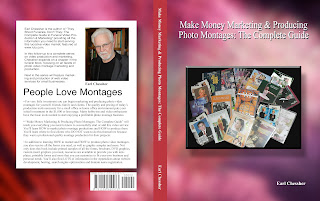
Anyone who MUST continue doing weddings because they’re addicted to them, love them, WANT to do them, PREFER to do them, can balance the load by doing fewer weddings and doing them at a more profitable price point. HOW? By having the option to turn down the low-ballers and tire kickers, those people who have NO real, educated perceived value for what you do, and accept ONLY the higher paying gigs because throughout any given week you’ve got a couple of montages, a funeral video gig, or if you are one of those ‘euuu, dead people’ people, there are dance recitals often held on thursdays, community and school drama performances often held on Wednesdays or Thursdays, daytime events ranging from school and community sports programs and nighttime events ranging from soccer and baseball to swimming competitions and more.
The concept of work once, sell many, often provides the same, or more, income as an average wedding but usually with an investment of one-quarter the time from shoot to delivery.
Consider expanding your services and production range and committing to the marketing and advertising needed to expand your business and its bottom line while reclaiming some of your personal life, family time and sanity. Be in a position to take gig that occur during the week, or even weekend gigs that require less investment of time for shooting as well as editing.
Check out my series of How-To books: “They Shoot Funerals, Don’t They: Complete Guide to Funeral Video Production & Marketing,” “Seven Ways to Make Money with Video,” (Book I, of a planned multi-book series, also in ePub and PDF), “Make Money Marketing & Producing Photo Montages: The Complete Guide” and the business marketing, branding and promotional program-in-a-book “Video StoryTellers!™ Productions.”
Remember: If you market, you will make it! © Earl Chessher
It often works well for those who have established a solid referral system, maintained a reasonable price/perceived value position in the industry and have engaged in an ongoing marketing program that keeps them in the bridal community loop. If you, however, are one of myriad independent videographers fighting over that 20 percent or so of the bridal market that actually WANTS a video of their ceremony and related events, you’re finding it a tough go trying to build your business and stay busy in an overwhelmingly saturated market, much less be or stay profitable.

Many variables come into play here. You’re a young family man or woman with a family to support and kids to raise. You HAVE to hold down your day job because it’s the cushion you rely upon to help until your video business gets established. You’re wife may, or not, also be employed and that brings about other responsibilities such as who is cooking tonight, who picks up the kids at school, takes them to dance or piano lessons, soccer or baseball games, swimming lessons. And how about when you want some quiet quality time with the spouse, or family time with the whole bunch?
Wedding production may very well be all you can, or want to handle. Weekend work that you can control by accepting bookings (if you’re getting the calls or inquiries and referrals) only on dates you want to work, occasionally working a bridal fair or other event that gets you exposure to the wedding community. You’re in control, and sometimes your spouse is right there beside you, helping, working and even enjoying it.
Or, you could overbook, overwork yourself and/or your wife or husband, wind up with an overwhelming editing backlog, over-extend yourself financially trying to keep up with the latest technology and soon to become equipment standard, painted yourself into a corner that takes up all your former family or free time in order to try and stay afloat with all the productions sitting there, on the shelf, making you feel guilty in any number of ways. Usually, unfortunately, you’ve been competing on price and have not been bringing in enough to warrant the 40 or so hours you require to edit a wedding video masterpiece. Editing becomes a chore, no longer fun, and being especially creative with your work eats into the time you used to spend with family, friends, kids and yourself. You even start outsourcing your editing but that eats into the already small markup you have on your time and work, and one day you come to the realization you’re very close to burnout, personal/professional failure or going out of business.
If you DO have it all under control and are happy with how things are going for you in your wedding video production business, read no further. If you are REALLY happy doing weddings, enjoy the creative rush and have NO problem staying up all hours, missing the Little League playoffs or dance recitals (and your spouse has no problem with you having no problems) then by all means, Spielberg stay the path.
Diversification, however, can be the path to fewer ulcers, divorces, litigation, long and late nights eating junk food and editing. Diversification can offer you the change-up that variety provides, easing the pressure and workload while adding to the bottom line, usually quicker and in fewer hours.
AND, if you’ve been into video production on a full-time basis for a year or longer because you need the weekdays to edit, market, make and receive calls, book appointments with prospective brides and grooms (who usually want to meet with you in the evening, at a coffee shop or restaurant), maintain equipment, attend rehearsals and all the other stuff that goes with being a potentially successful wedding video production professional or specialist ... did I say “edit”? Then, diversification will be the best thing that ever happened to you.
Diversification offers both part- and full-time videographers an opportunity to further control their workload, commitment to family and get back the personal life they once enjoyed but had to give up for the sake of the business, or their sanity.

Anyone who MUST continue doing weddings because they’re addicted to them, love them, WANT to do them, PREFER to do them, can balance the load by doing fewer weddings and doing them at a more profitable price point. HOW? By having the option to turn down the low-ballers and tire kickers, those people who have NO real, educated perceived value for what you do, and accept ONLY the higher paying gigs because throughout any given week you’ve got a couple of montages, a funeral video gig, or if you are one of those ‘euuu, dead people’ people, there are dance recitals often held on thursdays, community and school drama performances often held on Wednesdays or Thursdays, daytime events ranging from school and community sports programs and nighttime events ranging from soccer and baseball to swimming competitions and more.
The concept of work once, sell many, often provides the same, or more, income as an average wedding but usually with an investment of one-quarter the time from shoot to delivery.
Consider expanding your services and production range and committing to the marketing and advertising needed to expand your business and its bottom line while reclaiming some of your personal life, family time and sanity. Be in a position to take gig that occur during the week, or even weekend gigs that require less investment of time for shooting as well as editing.
Check out my series of How-To books: “They Shoot Funerals, Don’t They: Complete Guide to Funeral Video Production & Marketing,” “Seven Ways to Make Money with Video,” (Book I, of a planned multi-book series, also in ePub and PDF), “Make Money Marketing & Producing Photo Montages: The Complete Guide” and the business marketing, branding and promotional program-in-a-book “Video StoryTellers!™ Productions.”
Remember: If you market, you will make it! © Earl Chessher
Sunday, July 22, 2012
No Chance for Wedding Video COOP
I've been sharing a one-on-one dialogue on another forum with fellow frustrated independent professional wedding video services provider, Ed Rogers (website link here), who, like me, thinks the wedding video industry is missing the ball when it comes to where the most benefit could be derived from a marketing strategy. We both believe a wedding videographer cooperative (CO-OP) would help put into motion a branding and awareness campaign that could convince otherwise the estimated 80 percent of the bridal market that thinks they DO NOT want a professionally produced video of their wedding day and events.
This is something I’ve pounded on since my early video career days, when I thought wedding video production was all that and a bag of chips, before I realized that in order to survive in the world of independent professional video services providers (IPVSPs) I needed to diversify — see VideoStoryTellers!™ and CorElAnn Video Productions. Not to say that, if they pay my price, I would hesitate even today to produce another wedding video for a discerning bride and groom. Nowadays, however, I don’t go after them, they find me, either by way of my long-standing wedding services website or through referrals.

I write this blog article believing, as I told Ed in my last forum response, that this topic hasn’t much appeal, or maybe my lengthy articles are too long for the average “non-reader” to digest, much less read, comprehend and comment about. I believe that the average wedding videographer is an independent sort, a person who doesn’t WANT to CO-OP with others in the wedding videographer community and certainly doesn’t want to help generate business opportunities for "The Competition” much less give anything BACK to the industry-at-large.
In all fairness many members of the wedding video services industry DO “give back” but usually, myself included, by sharing what they know in paid seminars and speaking engagements, via commercial publications, DVDs and other resources. Some will, as I often do, share free information, experiences and opinions on various video related forums. I was a past member of WEVA (Wedding and Event Videographers Association) and recently became reacquainted with this association via an associate of my own. I was less than delighted to find that this once venerable organization’s website is a wasteland, unvisited and inactive with rare posts and rarer replies. Postings and responses now there are often months, if not years, apart. Sad, but true.
Why? I believe, like myself, Ed and many, many others who’ve enjoyed, appreciated and even supported WEVA at one time or another in our professional lives, it is no longer gratifying to pay membership dues to ANY organization that only seems focused on getting more of our dollars without investing in an ongoing branding and awareness campaign that would put dollars in our individual pockets. Thus, early on, I’ve expounded time and again on the necessity of an organization focused in whole on a campaign that can convince the estimated 80-percent of the bridal market NOT wanting video, to WANT VIDEO! Can this be done? Well, when I originally brought it up, many years ago, I was told that WEVA wasn’t in the business to get its members business, but to teach, instruct and educate.
All this, and more, I’ve mentioned, covered, brought up or expanded upon in the Videomaker forums (see the link, first paragraph) with only Ed Rogers and one other, venerable professional video producer Jack Wolcott, as my (presumed) sole readers, and certainly ONLY responder. The rest of the series RINGS of dead silence. As our discussion continued, it begat the question “Why?”. Why it is impossible, unfathomable or otherwise unlikely a CO-OP focused on bridal awareness of their NEED for a professionally-produced wedding video, an ongoing branding approach that enhances the image of the independent professional wedding video services provider in the eyes of those who’ve read or heard one too many horror stories about bad videographers?
INDEPENDENT VIDEOGRAPHERS ARE INHERENTLY SELFISH
Wedding videographers who NEED to be members of a cooperative that focuses on developing public awareness and branding (such as ‘Where’s the Beef?’ or ‘Got Milk’ for example) probably cannot afford to participate. Heck, most of us are barely hanging on after over-investing in expensive equipment (needed or not) and up to our eyeballs in debt we cannot generate enough business to reduce. A LOT of us are thinking of EXIT STRATEGIES not ways to shore up our seriously leaning (into the red ink) independent video businesses.
Those other guys, the top 5- or 10-percent, already have independent (and well-deserved) brand recognition, already get all the business they want or can handle and have NO need or desire to invest in such a branding and public awareness, centralized resource program.
And NEITHER SIDE really wants to do something that’s going to help “The Competition” regardless of how much good an ongoing COOP effort at market saturation could do the industry.
We independents are essentially a selfish lot regarding sharing of our so-called trade secrets, client lists, or successful marketing strategies, other than, of course, getting paid for our seminar presentations, books and DVDs or Internet subscription programs.
And this is not to indict such behavior. We all should be able to profit on our knowledge, wisdom and skills. I’ve been known to publish and sell a book or three on how to make money in the video industry but I also have been contributing to this FREE blog since 2004, as have other friends in the video industry.
I’m just saying there also is a real need for a COOP that helps promote the professional wedding video community at large, possibly encouraging that HUGE CHUNK of the bridal industry pie who DOES NOT want video — an estimated 80-percent of brides — to change their minds.
WHAT WOULD IT TAKE TO CREATE A SUCCESSFUL CO-OP?
It would take anywhere from 300-to-500 members (an easy number considering the vast community of people with cameras videotaping weddings) paying maybe $15 a month, to generate the funds needed to maintain a national awareness campaign and marketing/branding strategy; set up and establish an effective resources website; and organize a board or committee or whatever oversight structure is needed to ensure the organization focuses ONLY on what it should — promotion of the fact that ALL BRIDES, not just the current 20 percent or so who actually WANT a wedding video, should have a professionally produced wedding video of their event.
It would take dedication, commitment, resources, faith in the program and a consistent promotion mentality.
Can this happen? Could it be done? Would it work? Sooner or later the independent wedding video services provider community is going to have to come to the realization that unless this happens, they're going to be relegated to fighting and competing amongst themselves for the tiny, wee portion of the 20 percent of brides already sold on the idea of a wedding video. Not much profit in that, as all of us well know.
Remember, If You Market, You Will Make It! © Earl Chessher
This is something I’ve pounded on since my early video career days, when I thought wedding video production was all that and a bag of chips, before I realized that in order to survive in the world of independent professional video services providers (IPVSPs) I needed to diversify — see VideoStoryTellers!™ and CorElAnn Video Productions. Not to say that, if they pay my price, I would hesitate even today to produce another wedding video for a discerning bride and groom. Nowadays, however, I don’t go after them, they find me, either by way of my long-standing wedding services website or through referrals.

I write this blog article believing, as I told Ed in my last forum response, that this topic hasn’t much appeal, or maybe my lengthy articles are too long for the average “non-reader” to digest, much less read, comprehend and comment about. I believe that the average wedding videographer is an independent sort, a person who doesn’t WANT to CO-OP with others in the wedding videographer community and certainly doesn’t want to help generate business opportunities for "The Competition” much less give anything BACK to the industry-at-large.
In all fairness many members of the wedding video services industry DO “give back” but usually, myself included, by sharing what they know in paid seminars and speaking engagements, via commercial publications, DVDs and other resources. Some will, as I often do, share free information, experiences and opinions on various video related forums. I was a past member of WEVA (Wedding and Event Videographers Association) and recently became reacquainted with this association via an associate of my own. I was less than delighted to find that this once venerable organization’s website is a wasteland, unvisited and inactive with rare posts and rarer replies. Postings and responses now there are often months, if not years, apart. Sad, but true.
Why? I believe, like myself, Ed and many, many others who’ve enjoyed, appreciated and even supported WEVA at one time or another in our professional lives, it is no longer gratifying to pay membership dues to ANY organization that only seems focused on getting more of our dollars without investing in an ongoing branding and awareness campaign that would put dollars in our individual pockets. Thus, early on, I’ve expounded time and again on the necessity of an organization focused in whole on a campaign that can convince the estimated 80-percent of the bridal market NOT wanting video, to WANT VIDEO! Can this be done? Well, when I originally brought it up, many years ago, I was told that WEVA wasn’t in the business to get its members business, but to teach, instruct and educate.
All this, and more, I’ve mentioned, covered, brought up or expanded upon in the Videomaker forums (see the link, first paragraph) with only Ed Rogers and one other, venerable professional video producer Jack Wolcott, as my (presumed) sole readers, and certainly ONLY responder. The rest of the series RINGS of dead silence. As our discussion continued, it begat the question “Why?”. Why it is impossible, unfathomable or otherwise unlikely a CO-OP focused on bridal awareness of their NEED for a professionally-produced wedding video, an ongoing branding approach that enhances the image of the independent professional wedding video services provider in the eyes of those who’ve read or heard one too many horror stories about bad videographers?
INDEPENDENT VIDEOGRAPHERS ARE INHERENTLY SELFISH
Wedding videographers who NEED to be members of a cooperative that focuses on developing public awareness and branding (such as ‘Where’s the Beef?’ or ‘Got Milk’ for example) probably cannot afford to participate. Heck, most of us are barely hanging on after over-investing in expensive equipment (needed or not) and up to our eyeballs in debt we cannot generate enough business to reduce. A LOT of us are thinking of EXIT STRATEGIES not ways to shore up our seriously leaning (into the red ink) independent video businesses.
Those other guys, the top 5- or 10-percent, already have independent (and well-deserved) brand recognition, already get all the business they want or can handle and have NO need or desire to invest in such a branding and public awareness, centralized resource program.
And NEITHER SIDE really wants to do something that’s going to help “The Competition” regardless of how much good an ongoing COOP effort at market saturation could do the industry.
We independents are essentially a selfish lot regarding sharing of our so-called trade secrets, client lists, or successful marketing strategies, other than, of course, getting paid for our seminar presentations, books and DVDs or Internet subscription programs.
And this is not to indict such behavior. We all should be able to profit on our knowledge, wisdom and skills. I’ve been known to publish and sell a book or three on how to make money in the video industry but I also have been contributing to this FREE blog since 2004, as have other friends in the video industry.
I’m just saying there also is a real need for a COOP that helps promote the professional wedding video community at large, possibly encouraging that HUGE CHUNK of the bridal industry pie who DOES NOT want video — an estimated 80-percent of brides — to change their minds.
WHAT WOULD IT TAKE TO CREATE A SUCCESSFUL CO-OP?
It would take anywhere from 300-to-500 members (an easy number considering the vast community of people with cameras videotaping weddings) paying maybe $15 a month, to generate the funds needed to maintain a national awareness campaign and marketing/branding strategy; set up and establish an effective resources website; and organize a board or committee or whatever oversight structure is needed to ensure the organization focuses ONLY on what it should — promotion of the fact that ALL BRIDES, not just the current 20 percent or so who actually WANT a wedding video, should have a professionally produced wedding video of their event.
It would take dedication, commitment, resources, faith in the program and a consistent promotion mentality.
Can this happen? Could it be done? Would it work? Sooner or later the independent wedding video services provider community is going to have to come to the realization that unless this happens, they're going to be relegated to fighting and competing amongst themselves for the tiny, wee portion of the 20 percent of brides already sold on the idea of a wedding video. Not much profit in that, as all of us well know.
Remember, If You Market, You Will Make It! © Earl Chessher
Subscribe to:
Posts (Atom)